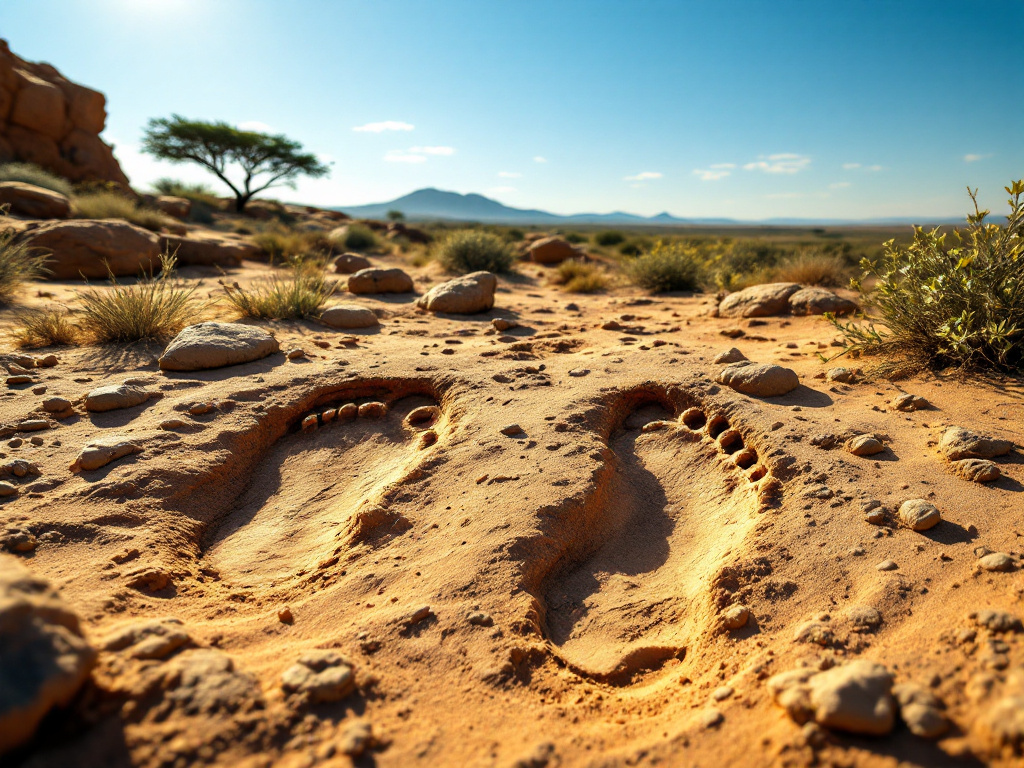
Ancient Footprints Reveal Two Hominin Species Coexisted in Kenya
**Scientists made a groundbreaking discovery of 1.5 million-year-old hominin footprints near Lake Turkana, Kenya, suggesting that two species, *Homo erectus* and *Paranthropus boisei*, coexisted at that time.** The unearthed footprints are the first evidence of different hominin species using the same habitat concurrently. This find is significant because it offers concrete evidence of interaction and coexistence, which skeletal remains alone could not provide. Researchers applied cutting-edge 3D imaging to analyze the anatomical and locomotive differences present in the footprints. The discoveries were serendipitous, detected by a local team after heavy rains in 2021. The team led by Louise Leakey, with Cyprian Nyete, unearthed these trace fossils, providing snapshots of ancient life. Unlike body fossils, trace fossils such as footprints are immovable, offering reliable behavioral evidence. This discovery advances our understanding of human evolution, indicating both cooperation and competition played roles in shaping our lineage. Despite the coexistence, *Paranthropus boisei* eventually went extinct, whereas *Homo erectus* continued to thrive. These findings, funded by the NSF, are pivotal for understanding the roles these species played in our evolutionary journey and how they navigated their prehistoric environment while interacting with each other and other species.