Astronomers and AI Uncover Record-Breaking Triple Star System with TESS
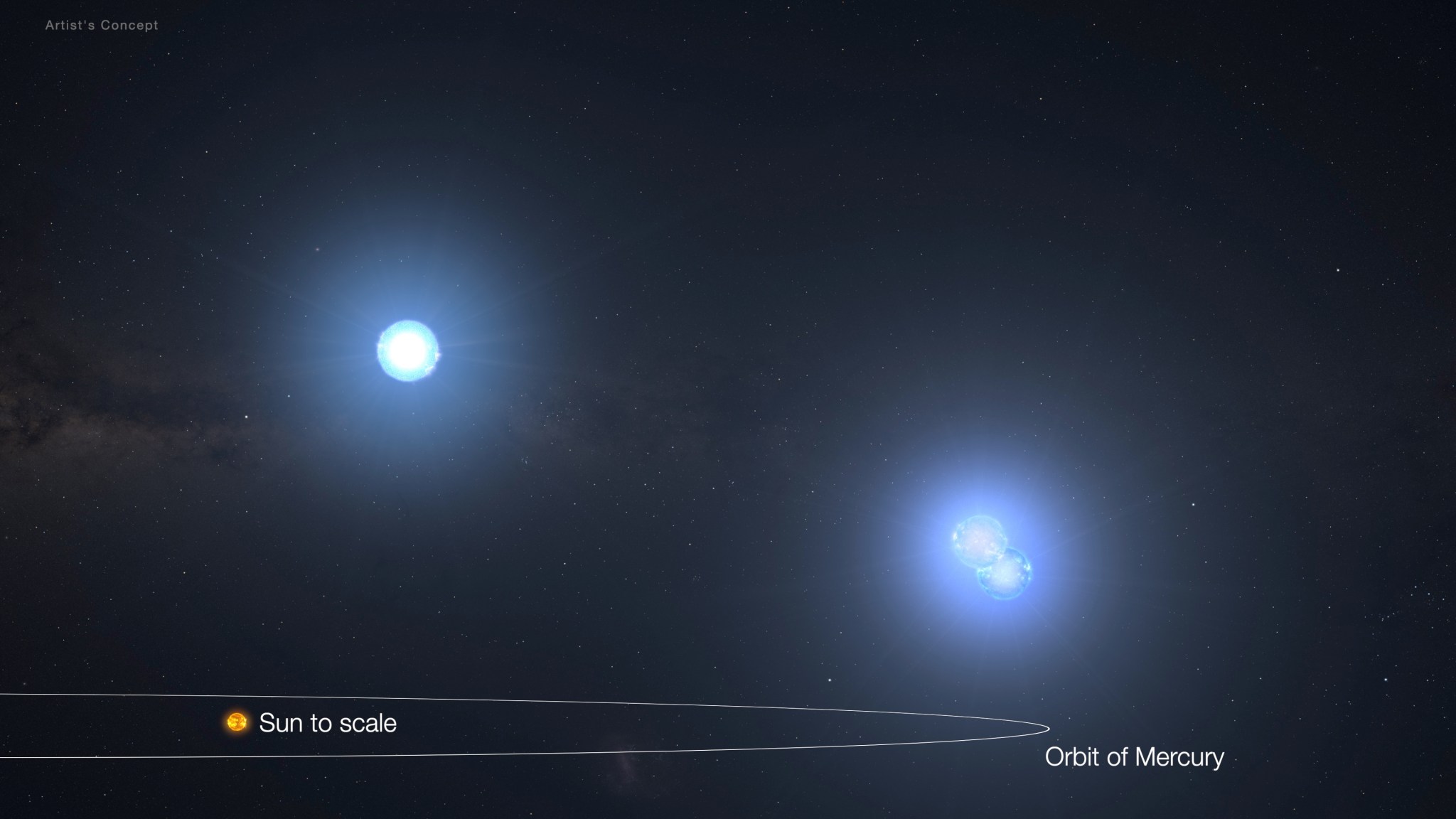
**Astronomers, aided by artificial intelligence and dedicated amateur scientists, have unearthed a unique stellar configuration named TIC 290061484 in the constellation Cygnus using data from NASA’s Transiting Exoplanet Survey Satellite (TESS).** The system comprises twin stars orbiting each other every 1.8 days, while a third star orbits the twins every 25 days. This discovery shatters the previous record for the shortest outer orbital period of a third star in such configurations, which was set in 1956 with a 33-day period. **The compact and edge-on alignment of this system enables precise measurement of the stars' orbits, masses, sizes, and temperatures,** offering an extraordinary opportunity to explore star formation dynamics and evolution. Led by Veselin Kostov at NASA's Goddard Space Flight Center, a comprehensive paper detailing the findings was published in *The Astrophysical Journal*. This discovery journey relied on *machine learning algorithms sifting through vast TESS starlight data*, identifying dimming patterns indicative of eclipses. Citizen scientists from the Visual Survey Group further refined these findings with their expertise, showcasing a successful collaboration between professional astronomers and amateur enthusiasts. The system's stability largely stems from its near-planar orbital arrangement, minimizing gravitational interference among the stars. Despite the tightly packed nature of this star trio, NASA scientists anticipate their orbits will remain stable for millions of years, though planetary formation in close proximity to the stars is unlikely. **As technology advances, NASA's upcoming Nancy Grace Roman Space Telescope promises to provide even more detailed insights.** With higher resolution than TESS, it will delve deeper into galactic cores, potentially revealing more such stellar systems. The discovery of TIC 290061484 underscores the potential for further celestial surprises, sparking excitement in the astronomical community.