Chromosomal Chaos: Unraveling the Complexity of Drug Resistance in Cancer
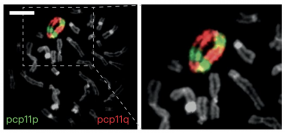
In a groundbreaking study, researchers have leveraged state-of-the-art single-cell analysis techniques to expose the intricate role of chromosomal instability in the progression and therapy resistance of acute myeloid leukemia (AML). **Chromosomal chaos**, also termed _chromothripsis_, is a condition where chromosomes are heavily distorted, a defining characteristic in complex karyotype AML (CK-AML). This study, spearheaded by experts from the German Cancer Research Center (DKFZ), the Heidelberg Stem Cell Institute HI-STEM, and the European Molecular Biology Laboratory (EMBL), unraveled the **cellular heterogeneity** inherent in CK-AML by analyzing patient samples' genomic, epigenetic, transcriptome, and protein profiles. The disease's prognosis is grim due to this diversity, as it culminates in a failure to respond to traditional therapies. By examining samples from several patients, both pre- and post-therapy, researchers detected **enormous heterogeneity** within the leukemia cell population, even within a single patient. They identified as many as 64 structural genomic aberrations in individual cancer cells and traced evolutionary patterns of leukemic clones, revealing how one minor subclone could dominate and cause relapse. These findings underscore a critical aspect of leukemia biology: that both _genetic_ and _non-genetic changes_ coalesce under therapeutic pressure, promoting resistance. Applying patient-derived xenografts, the study demonstrated how certain drug-resistant subclones could be counteracted using alternative drugs, such as _Elesclomol_ for venetoclax-resistant clones. Moreover, a specific focus was given to clones with pronounced stem cell characteristics, potentially tied to the **Ras signaling pathway's** activation, marking them as new therapeutic targets. The study’s revelations open new avenues for targeted therapies, providing a blueprint for tackling other cancers exhibiting chromosomal instability. As Trumpp, a leading author, summarizes: Through single-cell tech, it is possible to map the dynamic clonal evolution of CK-AML, pinpointing leukemia stem cells that fuel disease progression and resistance early, promising transformative changes in cancer treatment.