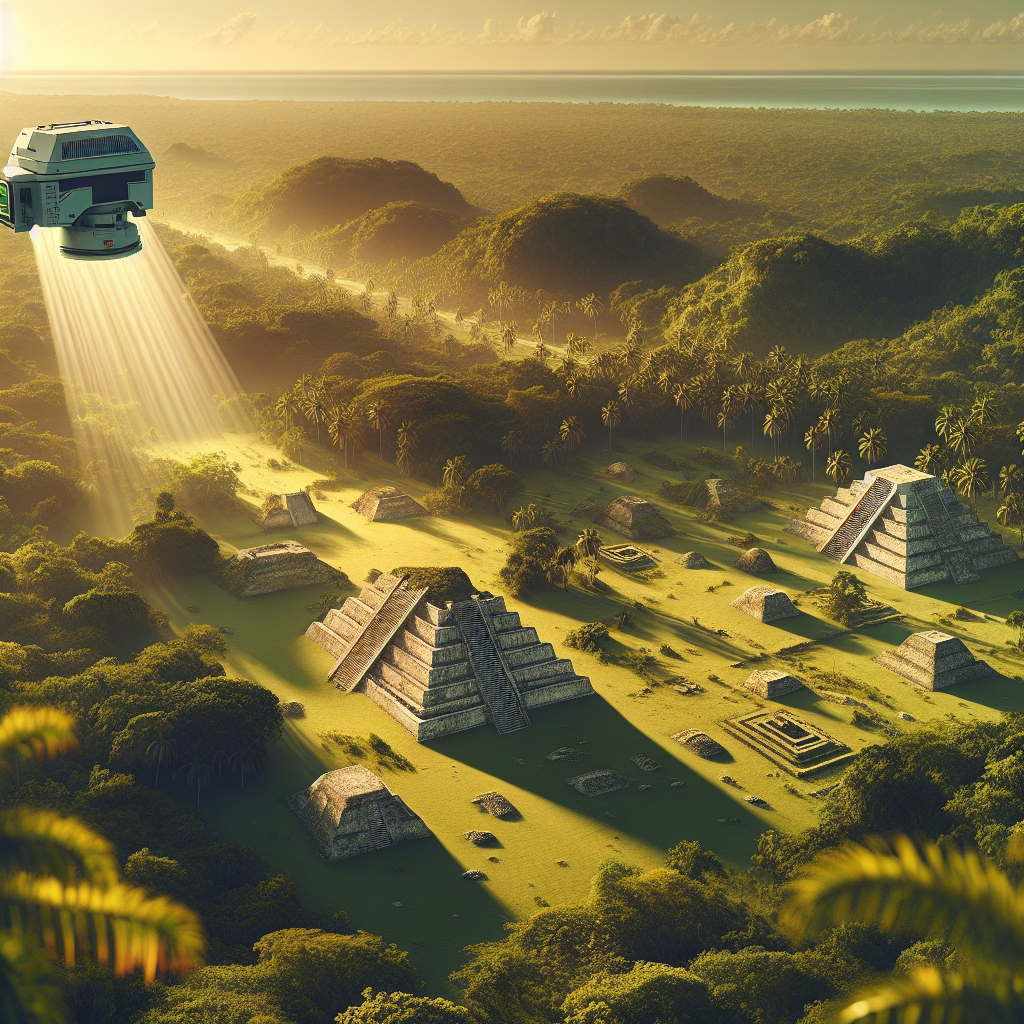
Discovering Hidden Maya Cities with Laser-Guided Imaging
Tulane University researchers, using **lidar technology**—a laser-based detection system—have unearthed substantial unexplored Maya settlements in Campeche, Mexico. The area, previously overlooked by archaeologists, revealed over **6,500 pre-Hispanic structures**, including a large city with iconic stone pyramids. **Lidar** allows for detailed three-dimensional mapping of large land areas, revealing anomalies such as pyramids and family houses. This study emphasizes the capacity of lidar to transform archaeological research, with Tulane's Middle American Research Institute (MARI) leading these advancements. The findings challenge previously-held views on the Maya civilization by showing a more complex and diverse landscape. A central point of interest is the potential size of the population that these structures suggest, pushing back against earlier assumptions that known large sites like Tikal provided a representative picture of the Maya lowlands. By revealing both dense urban centers and scattered smaller communities, the research underscores the varied organization and environmental adaptations of the ancient Maya, offering fresh perspectives on their societal complexities.