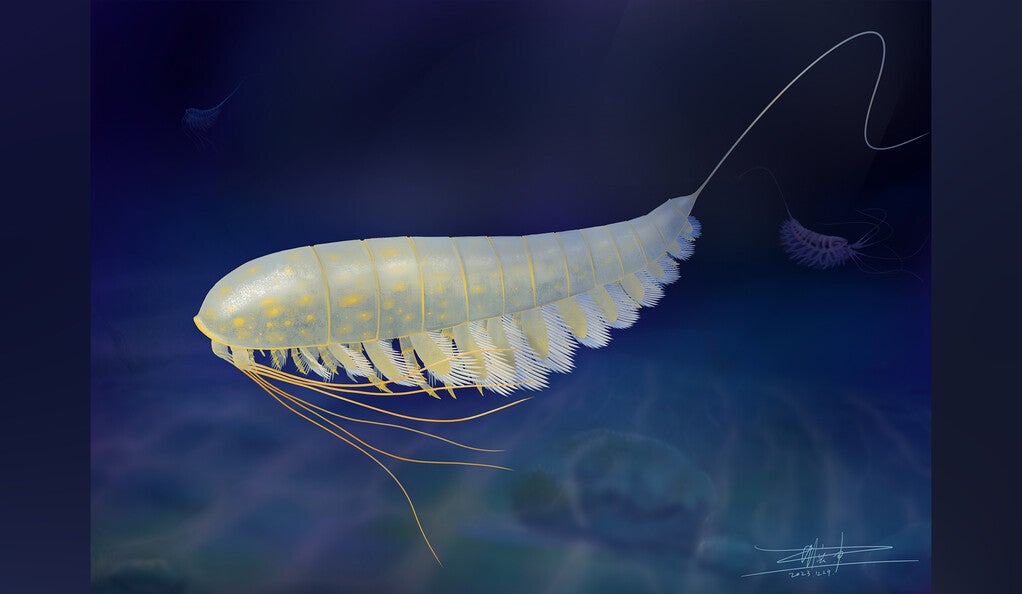
Discovering the Glittering Past: Lomankus edgecombei
**Paleontologists have unveiled an extraordinary discovery in the realm of ancient arthropods: the fossilized remains of *Lomankus edgecombei*, a distant cousin of modern-day horseshoe crabs, scorpions, and spiders.** Found in New York's Beecher's Bed, these fossils date back 450 million years to a time when the area was submerged under ocean waters. What sets these fossils apart is their preservation in layers of pyrite, commonly known as fool's gold, which replaced the soft tissue of the organism, ensuring the preservation of fine anatomical details. This phenomenon highlights the significance of Beecher's Bed in securing evidence of ancient oceanic life. The species belongs to the Megacheira, a group of arthropods known for specialized appendages akin to a biological Swiss army knife. The *Lomankus* fossils reveal long, whip-like flagella used for sensing and exploring their environment. The presence of these fossils suggests the Megacheirans persisted beyond the Cambrian Period into the Ordovician, challenging previous notions about their extinction timeline. Notably, this discovery is intertwined with Yale's historical paleontological pursuits, starting with Charles Emerson Beecher and continuing with scholars like Derek Briggs, who employed CT scanning to capture 3D images of the fossils, unveiling their remarkable preservation. These fossils, now part of the Peabody Museum's collection, are a testament to the evolutionary narratives hidden within our planet's geological history.