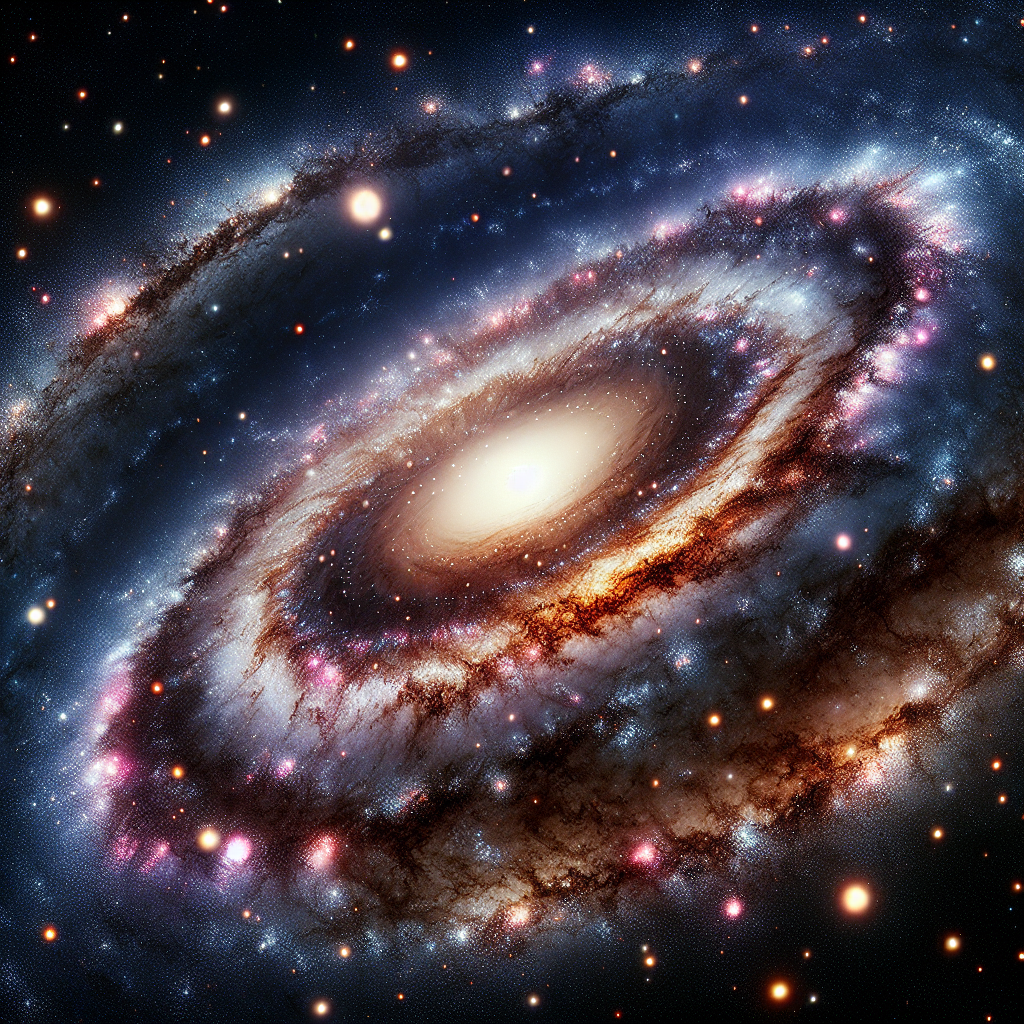
Discovery of REBELS-25 Challenges Our Understanding of Galaxy Formation
**Astronomers have made a groundbreaking discovery of a distant galaxy, REBELS-25, that is surprisingly similar to the Milky Way.** Using the Atacama Large Millimeter/submillimeter Array (ALMA), researchers observed this galaxy as it appeared 700 million years after the Big Bang. This disc-shaped galaxy appears unexpectedly organized, defying the common belief that early galaxies were chaotic and only evolved into orderly forms like the Milky Way over billions of years. **REBELS-25's discovery was made by a team of astronomers, including those from Leiden University and Liverpool John Moores University.** Initially detected as a rotating galaxy, follow-up high-resolution observations with ALMA confirmed its structure and its status as the furthest strongly-rotating disc galaxy known. **What makes REBELS-25 particularly intriguing is its seemingly well-developed structures,** such as a central bar and potential spiral arms. These features are characteristic of more mature galaxies and not what scientists expect to find in galaxies from a mere 5% of the Universe's current age. **The discovery of REBELS-25 challenges existing theories of galaxy evolution by suggesting that some galaxies formed orderly structures more quickly than previously believed.** Future observations will aim to further investigate this galaxy and potentially reveal more such early structures, paving the way for a revised understanding of the Universe's formation.