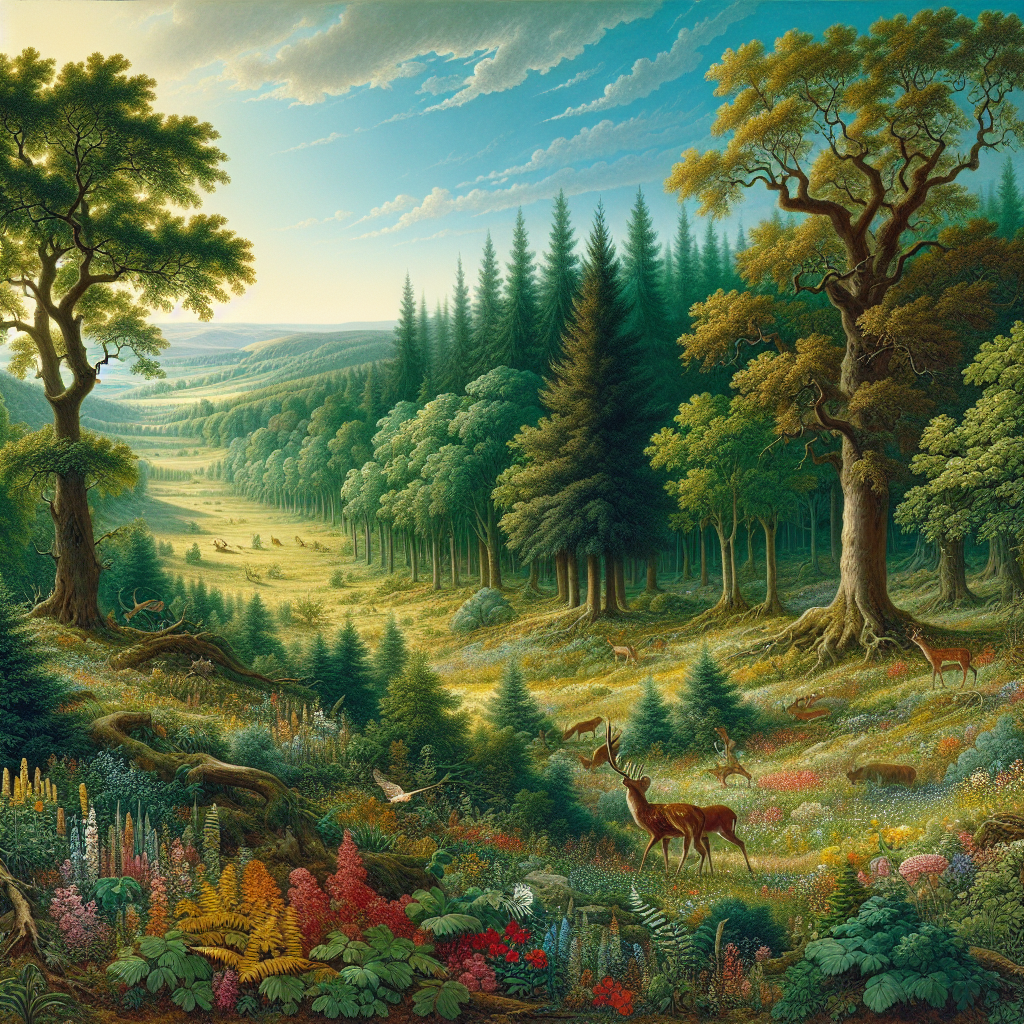
Europe's Ancient Forests: A Thriving Mosaic of Open Woodland
Recent research from Aarhus University sheds light on the nature of ancient European forests, challenging the conventional image of densely wooded areas. **These forests were predominantly open and semi-open landscapes**, as evidenced by the prevalence of plant species such as hazel, oak, and yew, which thrive in sunlit, dynamic environments. This study, utilizing the REVEALS model for pollen-based reconstruction, focused on two significant periods: the Last Interglacial and the early-to-mid Holocene. The findings indicate that large herbivores, rather than natural fires or climatic conditions, were pivotal in maintaining these open woodlands. Dr. Elena Pearce and Professor Jens-Christian Svenning emphasize that these semi-open forests supported a diverse array of species, crucial for Europe's biodiversity, by providing varied habitats. **The study’s implications extend to modern nature management, suggesting that revitalizing semi-open landscapes can enhance biodiversity and climate resilience.** Such environments offer better ecosystem functions, including carbon storage and pollinator habitats. The insights gathered highlight the potential for reforestation strategies that recreate these ancient woodland dynamics, aligning them with current ecological and climatic challenges.