Exploring the Layered Interiors of Uranus and Neptune: New Insights
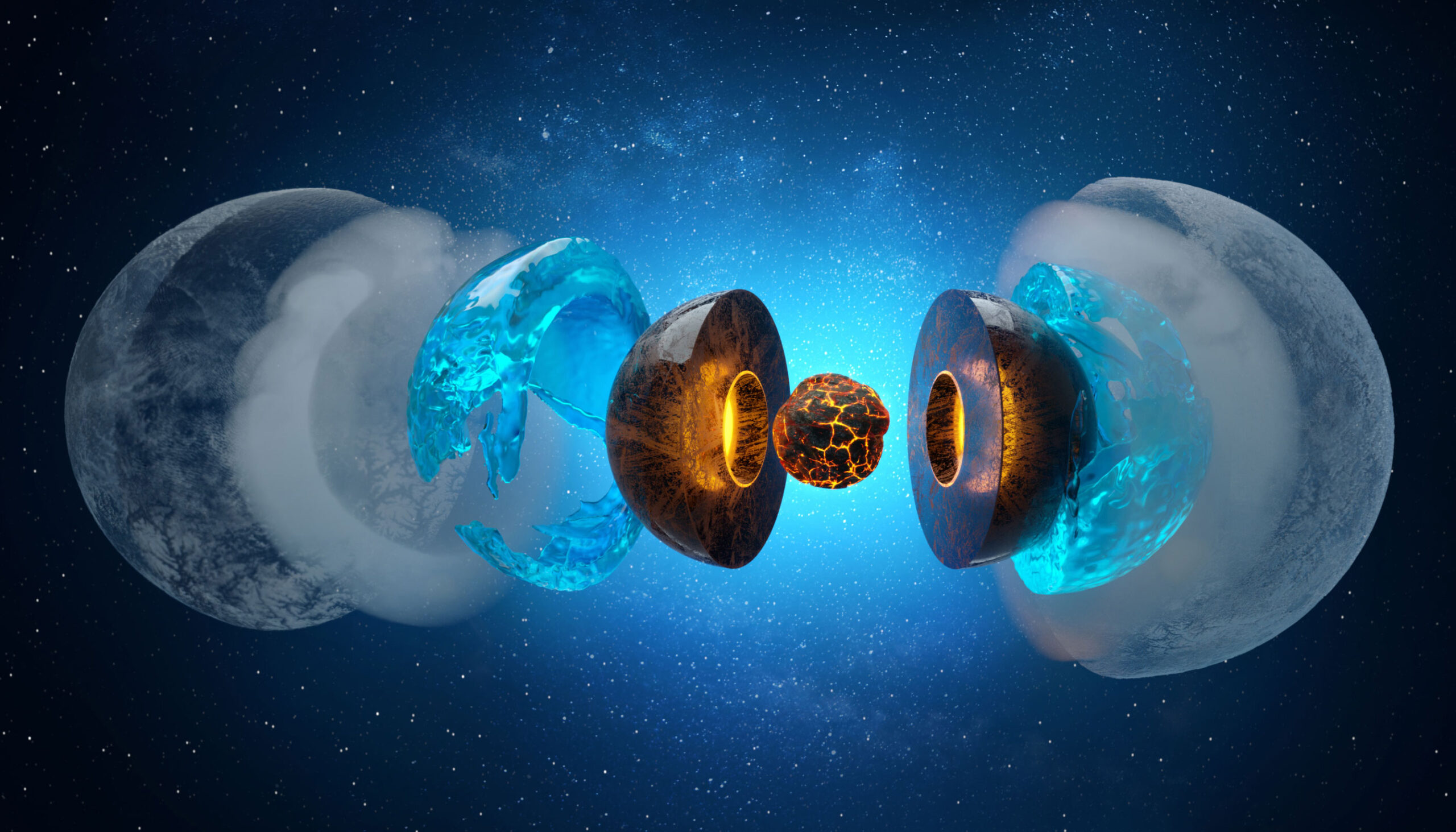
**Planetary scientists have proposed a new theory about the interiors of Uranus and Neptune, suggesting that these ice giants are composed of two immiscible layers, akin to oil and water, that do not mix.** This hypothesis, developed by Burkhard Militzer from UC Berkeley, challenges previous notions such as diamond rain or super-ionic water, and provides a compelling explanation for the planets' unusual magnetic fields. **Militzer's research, published in the Proceedings of the National Academy of Sciences, argues that Uranus and Neptune possess a deep ocean of water beneath their cloud layers, followed by a highly compressed fluid comprised of carbon, nitrogen, and hydrogen.** Utilizing advanced computer simulations and machine learning, he discovered that these elements separate under extreme temperatures and pressures due to the expulsion of hydrogen from methane and ammonia, forming distinct water-rich and hydrocarbon-rich layers. **These findings align with measurements from the Voyager 2 mission, which suggested that the planets' magnetic fields are disorganized rather than dipolar, likely due to lack of convection in the lower layer.** The study's implications extend beyond our solar system, hinting at similar structures in exoplanets of comparable size. Moving forward, Militzer plans to test these findings in laboratory settings and potentially with NASA missions to further validate the existence of these layers.