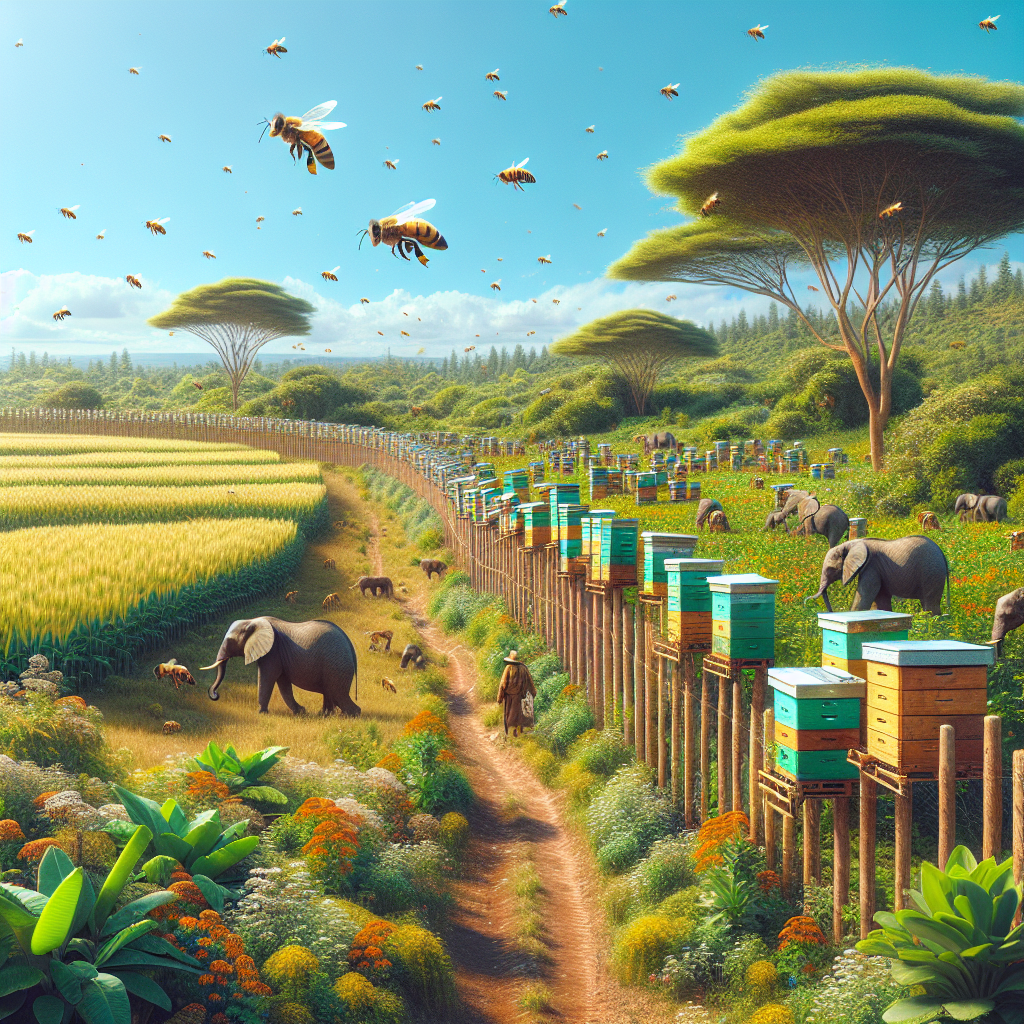
Harnessing Nature's Warriors: Beehive Fences to Protect Crops and Save Elephants
A study published in the JournalConservation Science and Practice, led by Save the Elephants and partners, highlights the effectiveness of **beehive fences** in deterring elephants from raiding crops in Kenya. The fences, composed of live beehives strung between posts, exploit elephants' natural fear of bees, preventing them from damaging farms. The study, involving 26 farms near Tsavo East National Park, recorded an average annual deterrence rate of 86.3% during peak crop seasons. Despite the success, challenges persist; droughts have significantly reduced hive occupation and honey production, impacting farmers' profits. Yet, even during these tough conditions, the beehives managed to produce a ton of honey, underscoring their additional benefits. Dr. Lucy King, who led the study, warns that ongoing habitat degradation and frequent droughts could undermine these efforts. She emphasizes the importance of continued **research and funding** to sustain these nature-based solutions. Dr. Patrick Omondi from the Wildlife Research and Training Institute stresses the need for empowering communities through sustainable solutions, commenting on the critical role of beehive fences in managing human-elephant conflict. By tapping into elephants' instinctual behaviors, beehive fences have become a powerful tool across Africa and Asia, currently implemented at 97 sites. The success of these fences not only showcases a path towards peaceful coexistence between humans and elephants but also highlights the urgent need for more innovative solutions in the face of environmental and population pressures.