Harnessing Thermochemical Energy for Efficient Indoor Heating
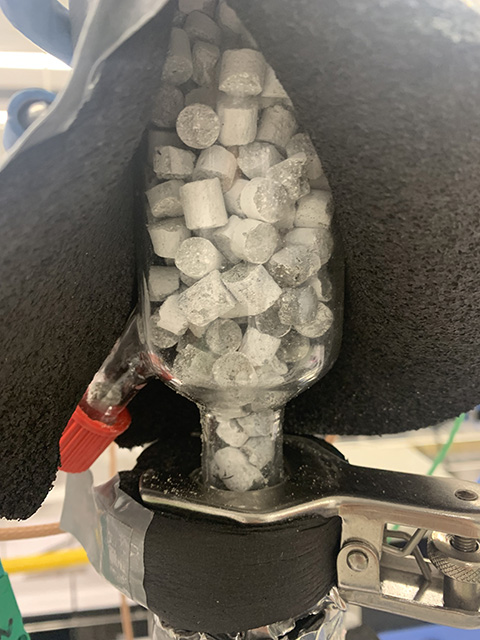
In a collaborative effort with Lawrence Berkeley National Laboratory, researchers from the U.S. Department of Energy’s National Renewable Energy Laboratory (NREL) are pioneering the use of **thermochemical materials (TCMs)** to heat indoor spaces. This initiative has the potential to transform how buildings in humid regions manage heating, particularly aiming to reduce electrical usage and enable load shifting. At the heart of this research is the implementation of **salt-hydrate TCMs** within a building’s HVAC systems, leveraging their ability to release heat upon hydration and absorb it during dehydration processes. The practical integration of TCMs into buildings involves either an open or closed system. Open systems, while simpler, can cause discomfort by drying indoor air in winter when moisture is scarce. Closed systems circumvent this issue by utilizing separate chambers for moisture interactions, though they introduce other complications. A primary goal of this research is to identify configurations that maintain comfortable humidity levels indoors while optimizing thermal performance. By leveraging experimental data and computer modeling, researchers tested how TCM reactors, particularly those powered by strontium chloride, performed in various climates like Atlanta, New York, Minneapolis, and Seattle. Their analysis showed that **humidity levels** and indoor air management are crucial in driving the hydration reactions necessary for optimal TCM performance. The findings have broad implications for a range of buildings including single-family homes and larger structures like hotels and offices. Remarkably, the **levelized cost of storage (LCOS)** for these setups is projected to be attractive for commercialization if manufacturing and installation costs are properly managed. As part of ongoing efforts, the research team will continue to explore closed-cycle systems as viable solutions, overcoming ambient humidity constraints to further refine and adapt this promising renewable energy technology.