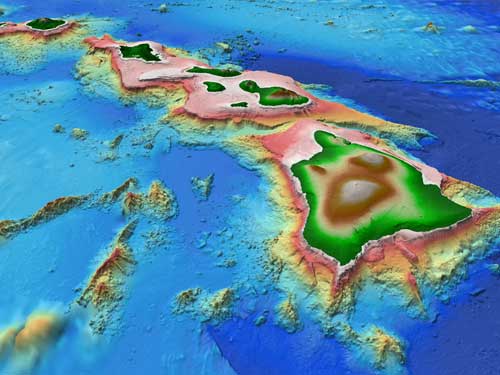
Hawaiian Ocean Eddies: Key to Unseen Phytoplankton Blooms
**New research led by the University of Hawai‘i (UH) at Mānoa has uncovered a fascinating mechanism by which eddies on the leeward side of the Hawaiian Islands stimulate far-reaching phytoplankton blooms.** The study, published in JGR Oceans and featured by the American Geophysical Union, highlights how these eddies transport nutrients not just locally but across to the opposite side of the island chain. These nutrients are crucial for phytoplankton, microscopic plants forming the base of the marine food chain. Typically, the Hawaiian waters are nutrient-poor, severely limiting biological productivity. However, lead author Kate Feloy and her team discovered through satellite data and computer models previously unreported phytoplankton blooms on the northern coastlines. The simulation experiments revealed that nutrients from eddies, though originating around 100 miles away, travel beneath the sunlit layer of the ocean around the islands, enabling local upwelling and the resultant blooms. This discovery identifies a new nutrient delivery mechanism, potentially impacting fisheries and productivity in other nutrient-poor regions beyond Hawai‘i. The far-reaching effects of these ocean features emphasize their importance in marine ecology and the potential implications for global nutrient cycling processes.