How a Massive Meteorite Impact Shaped Early Life on Earth
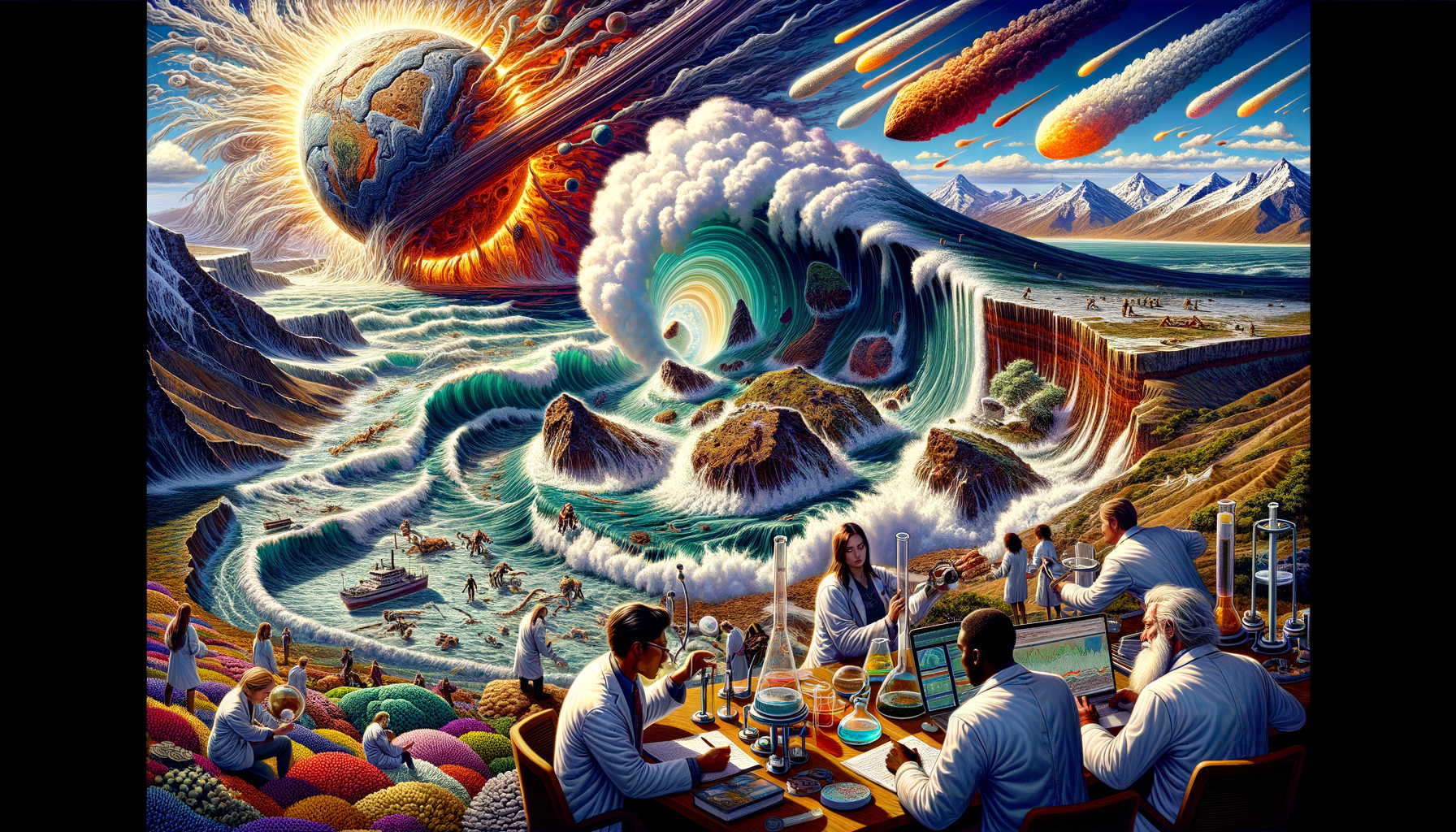
Billions of years ago, long before complex life existed, **massive meteorites frequently struck Earth**. One significant event, the "S2" impact, happened approximately 3.26 billion years ago. Dr. Nadja Drabon, an early-Earth geologist, is studying this ancient period to understand how such impacts influenced the planet's development. Her research, published in PNAS, focuses on the Barberton Greenstone Belt in South Africa, where geological evidence of this massive impact is found. The S2 meteorite, _estimated to be up to 200 times larger than the one that caused the dinosaur extinction_, triggered a series of chaotic environmental changes. **It caused tsunamis, stirred the ocean, and boiled off the top layers of water**, creating conditions that drastically impacted the biosphere. Despite the destructive forces, Drabon's team found evidence that bacterial life quickly rebounded. The heat and debris caused by the impact disrupted photosynthesis, yet the stirred-up iron and meteorite-delivered phosphorus created a rich environment for iron-metabolizing bacteria to thrive. This **shift towards iron-favoring bacteria** is crucial to understanding early life's adaptability. Drabon suggests that such meteoritic impacts, while catastrophic, may have played a role in life's diversification and resilience. Together with her team, Drabon meticulously analyzes sediment patterns and chemical signatures in rock layers to piece together past events. The Barberton Greenstone Belt, a major focus area, holds evidence of at least eight distinct impacts, including the S2. By examining these layers, the research aims to unveil more about Earth's primordial history and the role of meteorites in shaping life's trajectory.