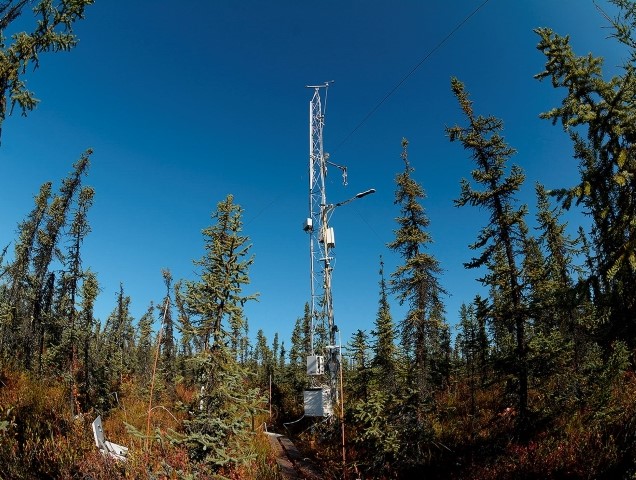
Long-Term Study Reveals Surprising CO2 Trends in Permafrost Forests
Recent research conducted by a team from Osaka Metropolitan University has unveiled **groundbreaking insights** into the CO2 dynamics over a 20-year period in Alaska's permafrost forests. The study, which is considered the first of its kind to offer such long-term data, has identified a complex interaction between climate change and carbon flux in these northern ecosystems. Over the years from 2003 to 2022, while these forests initially exhibited an increase in CO2 emissions, a significant turnaround in the last decade led to a nearly 20% rise in CO2 absorption. This intriguing phenomenon is largely attributed to the **adaptation of black spruce trees** to the increased moisture brought about by warming temperatures, allowing them to capture more CO2 during photosynthesis. The study highlights a paradox where climate change intensifies both carbon sources and sinks, suggesting that these findings could be pivotal in refining future climate change prediction models. Despite their significance, the researchers, led by Associate Professor Masahito Ueyama, caution that these results are limited to the past climate dynamics and underscore the necessity for further extended observational studies to accurately forecast the impacts of ongoing warming. Published in the Proceedings of the National Academy of Sciences, this study contributes valuable data towards understanding the complex feedback loop between **forests and the climate.**