Lunar Reconnaissance Orbiter Reveals Extensive Ice Deposits on Moon
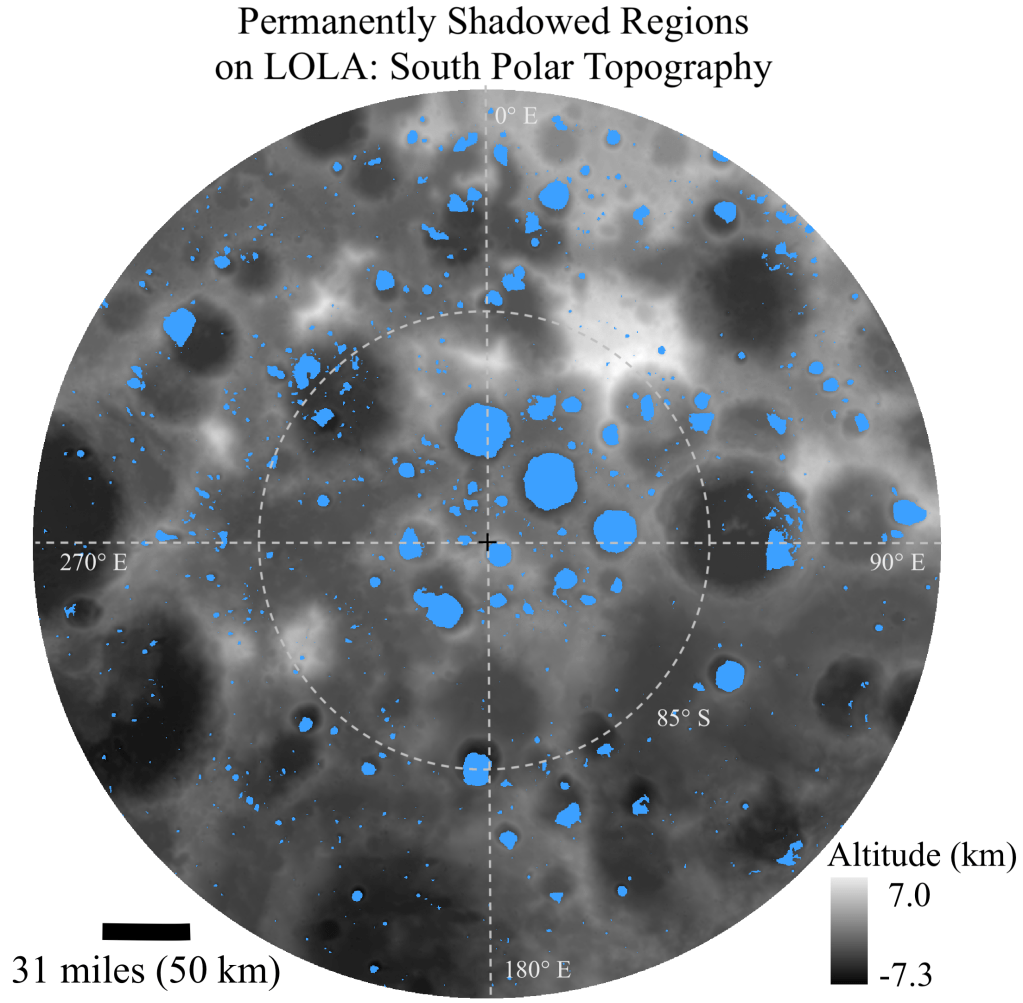
A new research analysis using data from NASA's *Lunar Reconnaissance Orbiter (LRO)* has uncovered surprising insights into the distribution of ice in the moon's regolith, demonstrating that these deposits are far more extensive than previously understood. This finding holds significant implications for the future of lunar exploration, as these ice deposits could be utilized to support human explorers with essential resources such as water, breathable air, and rocket fuel. NASA’s *Goddard Space Flight Center* team, led by Dr. Timothy P. McClanahan, employed the LRO's *Lunar Exploration Neutron Detector (LEND)* to detect these ice deposits through the behavior of epithermal neutrons. The study found widespread evidence of water ice within permanently shadowed regions (PSRs) beyond those near the lunar South Pole, reaching at least 77 degrees south latitude. These PSRs, typically located in topographic depressions near the lunar poles, maintain temperatures below 75 Kelvin, preserving ice deposits presumably for billions of years. Previous studies identified ice signs in larger PSRs south of the moon, but this new analysis reveals that smaller and more numerous deposits exist. It highlights how ice could become implanted in lunar regolith through impacts from space objects or by chemical reactions triggered by solar winds. By providing detailed maps of surface characteristics where ice is likely to be found, the study assists in planning future lunar missions. The ice detection relied on the LEND's *Collimated Sensor for Epithermal Neutrons (CSETN)*, which measures neutron reductions caused by hydrogen concentrations beneath the surface. These findings emphasize the resource potential of the moon's coldest, permanently shadowed areas, and could pave the way for sustainable lunar exploration and resource utilization.