Mapping the Future of Fishing Communities Amid Climate Change
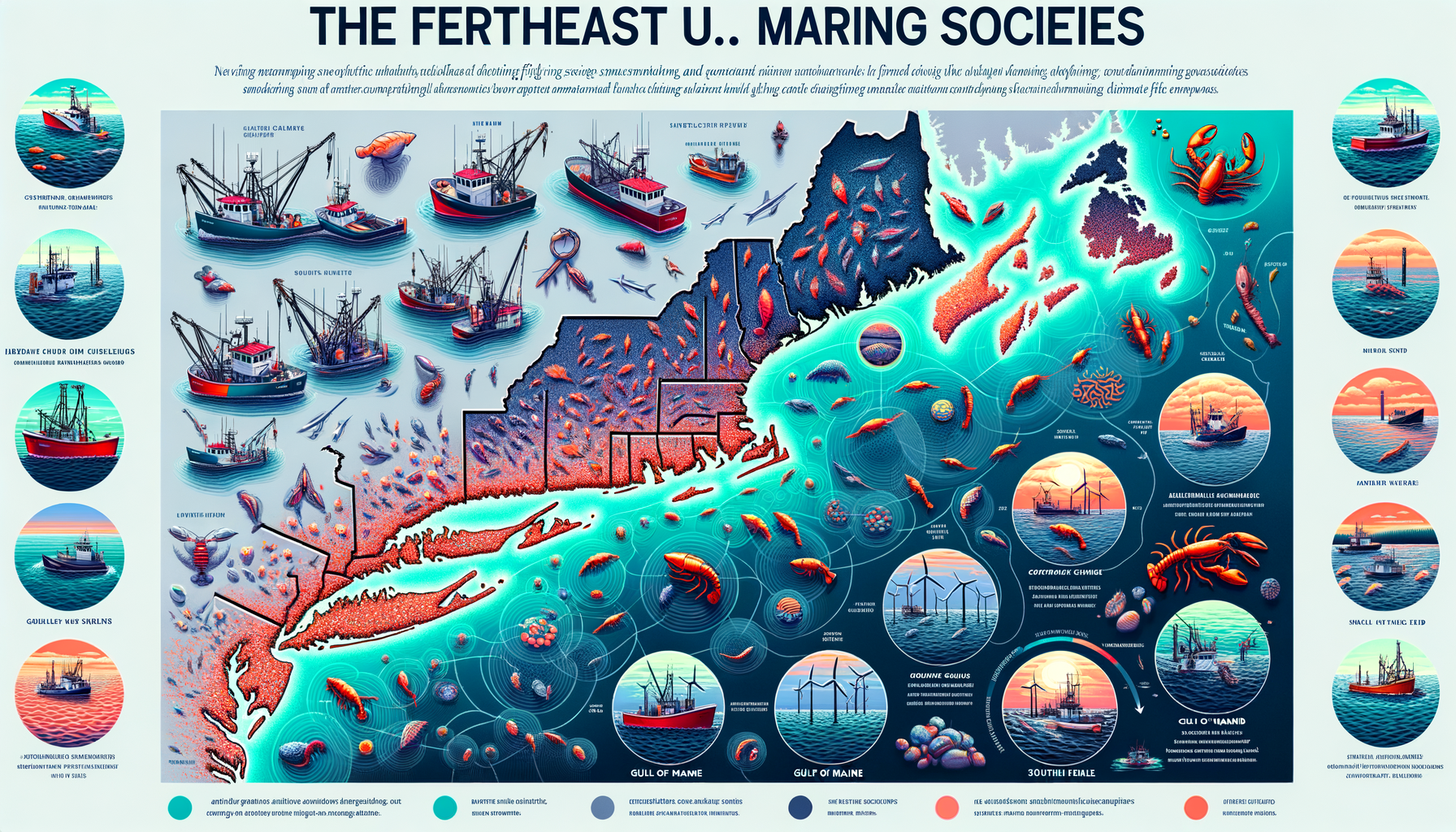
Rebecca Selden, an assistant professor at Wellesley College, has spearheaded a five-year research project creating a 'spatial sea map' that highlights how fishing communities along the Northeast seaboard adapt to changing climate conditions. Running from North Carolina to Maine, her study involves 266 fishing communities and was published in the *ICES Journal of Marine Science*. **Selden's work is pioneering**, offering granular insights into individual communities' adaptive strategies, crucial for understanding vulnerabilities and resilience amidst shifting fish distribution due to climate change. **Climate change** is altering seascapes through phenomena like ocean acidification and temperature shifts, pushing species to relocate. As a result, ocean use is also changing, with the introduction of structures like offshore wind turbines impacting fishing. Selden's research emphasizes that communities are trying various methods to adapt, but there's a lack of clarity on what works where. A significant output of her work is the *Communities at Sea (CaS) database*, which links historical fishing patterns to port communities for a quantitative assessment of catch flexibility, catch switching, and fishing ground mobility. The findings reveal diverse adaptive strategies: scallop-dredge fleets are highly mobile, Gulf of Maine lobster communities remain traditional, while Southern New England fleets show notable catch flexibility. Selden's detailed seascape map is instrumental in pinpointing which communities find it hard to switch catches or fishing locations, making them candidates for targeted policy interventions. She notes that **fishermen are not averse to adaptation**; rather, it's the existing regulations that often pose challenges. Selden aims to leverage this research to shape better policy decisions, spotlighting smaller, lesser-known fishing communities that can benefit from tailored approaches.