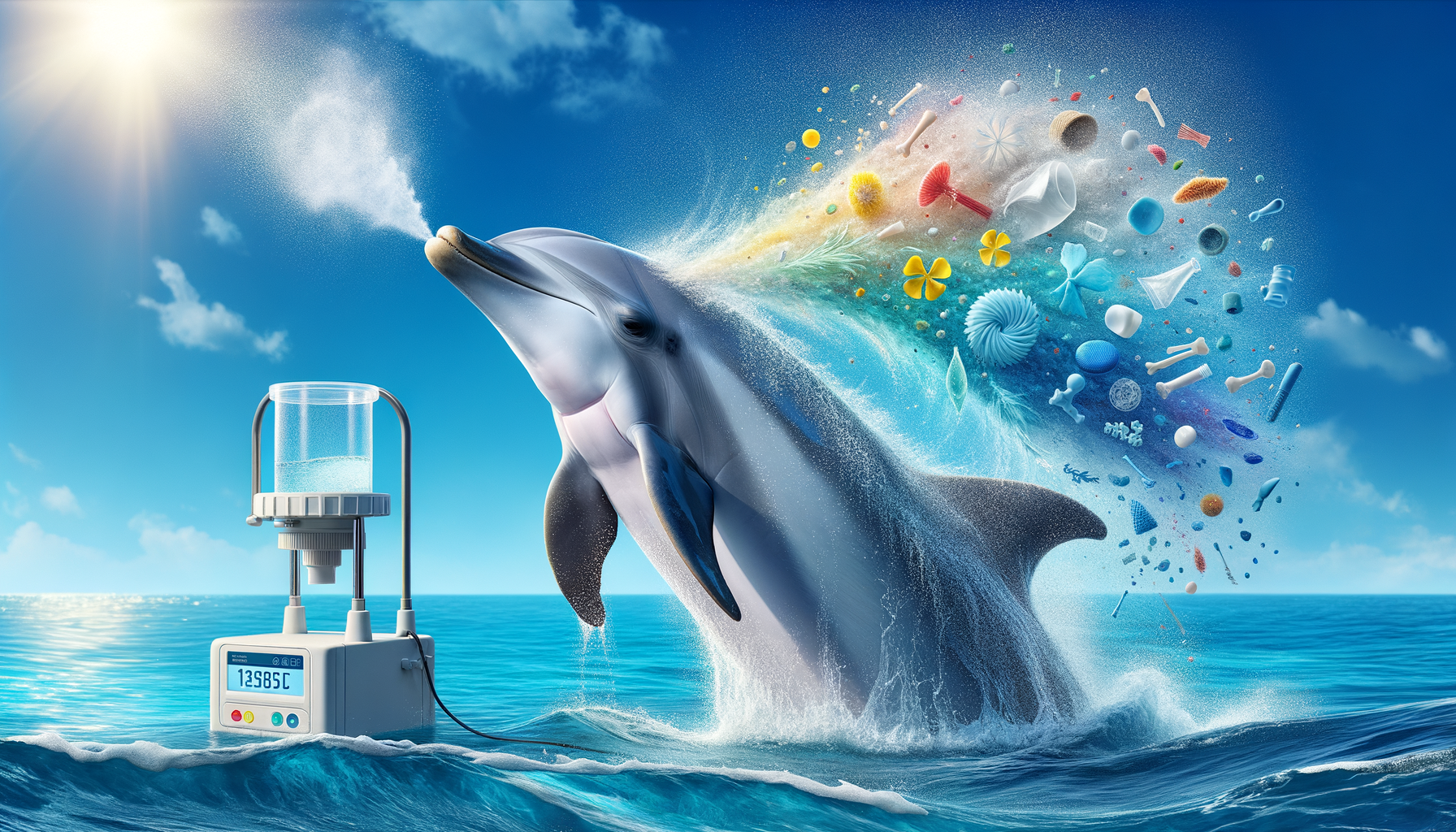
Microplastics Detected in Dolphin Breath: A New Route of Exposure
In a recent study published in the journal *PLOS ONE*, researchers have discovered microplastic particles in the exhaled breath of wild bottlenose dolphins, indicating that inhalation could be an important route of exposure to these contaminants. Conducted by Miranda Dziobak and her team at the College of Charleston, the study involved collecting exhaled air samples from dolphins in Sarasota Bay, Florida, and Barataria Bay, Louisiana. The team used a collection surface placed above each dolphin's blowhole during exhalation. **Key Findings:** - **Microplastics Identified:** Every sampled dolphin exhaled at least one suspected microplastic particle. These particles included different types of plastic, such as PET, polyester, and PMMA. - **Comparison with Ambient Air:** By sampling the surrounding air, the researchers confirmed that the microplastics were exhaled by the dolphins and not just present in the air. The study highlights the need to consider inhalation as a meaningful exposure route for dolphins, paralleling findings in humans. Given dolphins' large lung capacities and their deep breaths, researchers express concern about potential lung damage. Further research is needed to quantify exposure levels and understand the health impacts on dolphins.