Mysterious Dark UV Ovals Spotted at Jupiter's Poles
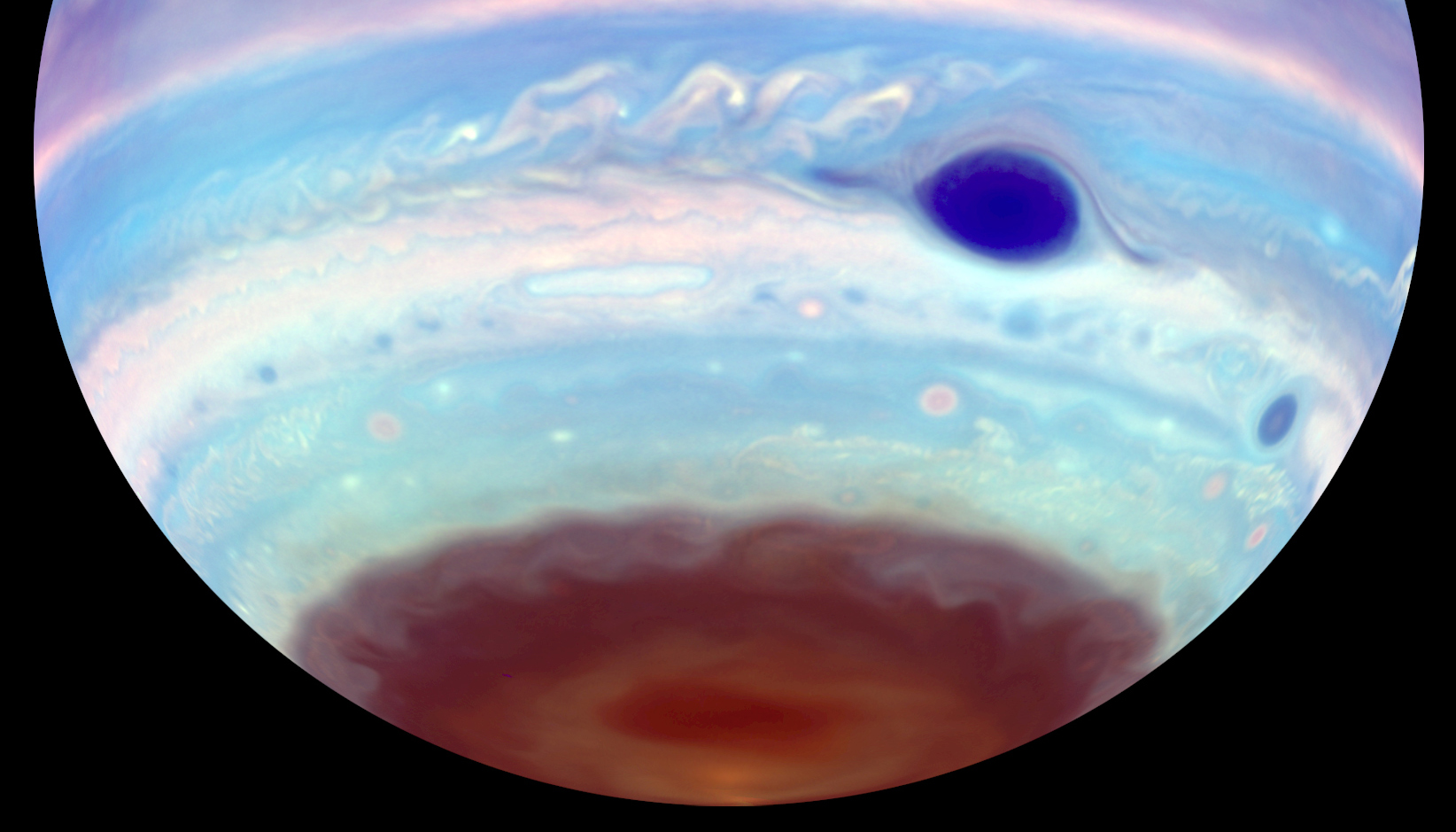
**University of California, Berkeley astronomers** have made a fascinating discovery on Jupiter—**dark ultraviolet ovals** at the planet's poles, which seem to appear and disappear randomly. These Earth-sized spots are embedded in layers of stratospheric haze and are visible only in ultraviolet wavelengths. **Dark ovals are mostly found at the south pole**, appearing in 75% of images, compared to less frequent appearances at the north pole. The discovery raises questions about the processes occurring in Jupiter's strong magnetic field, which reach deeper into the atmosphere than previously known. **UC Berkeley undergraduate Troy Tsubota's analysis** of Hubble Space Telescope images uncovered these common features, part of the Outer Planet Atmospheres Legacy (OPAL) project. **Collaborating experts theorize** that these dark ovals are created by vortices formed by interactions in Jupiter's magnetic field and ionized plasma from the volcanic moon Io. The vortex, spinning fastest in the ionosphere, creates dense haze in the atmosphere. Observations suggest **haze within the ovals is 50 times thicker** than usual, forming due to vortex dynamics rather than chemical reactions. This discovery, facilitated by NASA's support, underscores the importance of understanding atmospheric dynamics not just on giant planets like Jupiter, but also on exoplanets and Earth.