NASA and ESA Unveil Prototype for Space-Based Gravitational Wave Detection
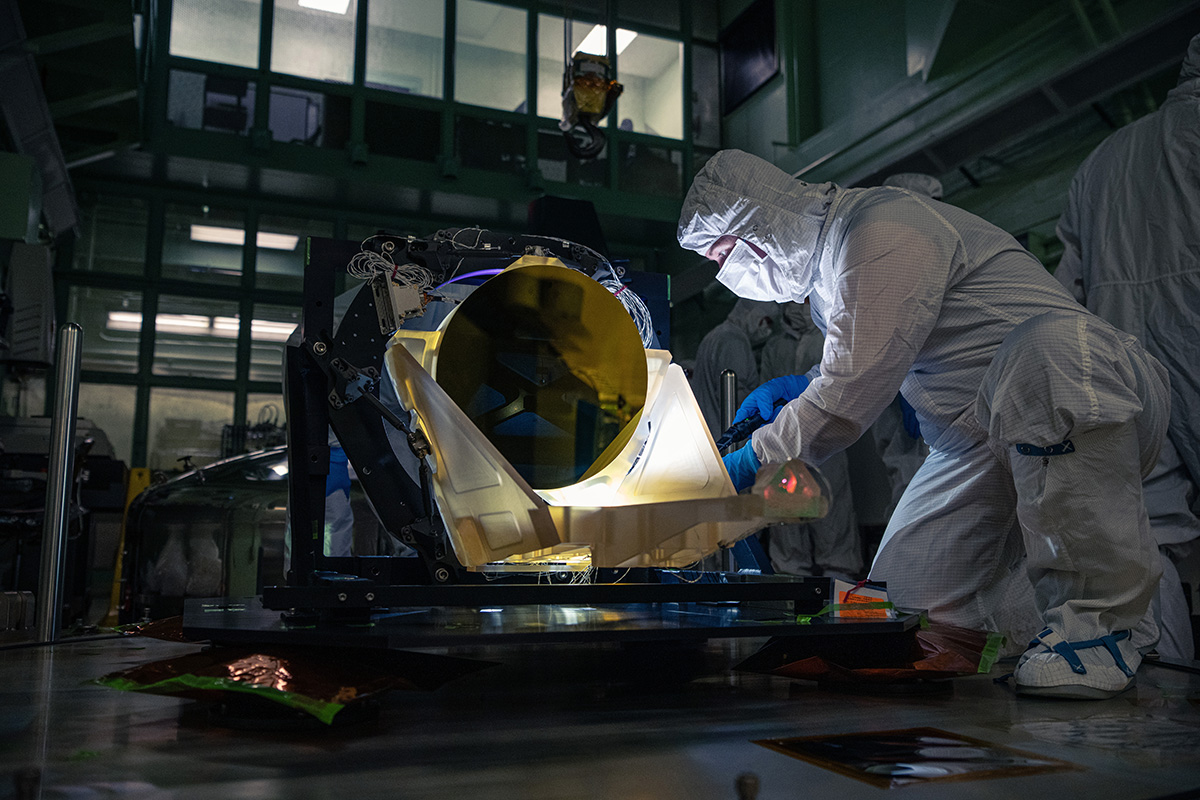
**NASA and the European Space Agency (ESA)** have collaborated on the LISA (Laser Interferometer Space Antenna) mission, which has unveiled its first full-scale prototype for six telescopes. These telescopes will be pivotal in enabling **space-based detection of gravitational waves** in the next decade. Gravitational waves are ripples in space-time, typically caused by massive cosmic events such as merging black holes. The LISA mission plans to employ lasers to measure incredibly precise distances between a trio of spacecraft arranged in a colossal triangular formation larger than the Sun itself. Each side of this formation will extend nearly 1.6 million miles (or 2.5 million kilometers) and will play a crucial role in tracking these waves. **NASA is responsible for supplying all six telescopes** that will be onboard. The Engineering Development Unit Telescope serves as a prototype that guides the mission's development. Manufactured by L3Harris Technologies, the telescope features a gold-coated primary mirror, which optimizes reflection of infrared lasers and minimizes heat loss. The telescope is constructed entirely from Zerodur, a specialized glass-ceramic known for its stability across varying temperatures. This innovative material choice ensures high precision, vital for the telescopes' operation. The LISA mission is poised for launch in the mid-2030s, marking a monumental leap forward in astrophysics and our understanding of the universe.