NASA's New Mission to Unveil Hidden Oceans on Uranus’s Icy Moons
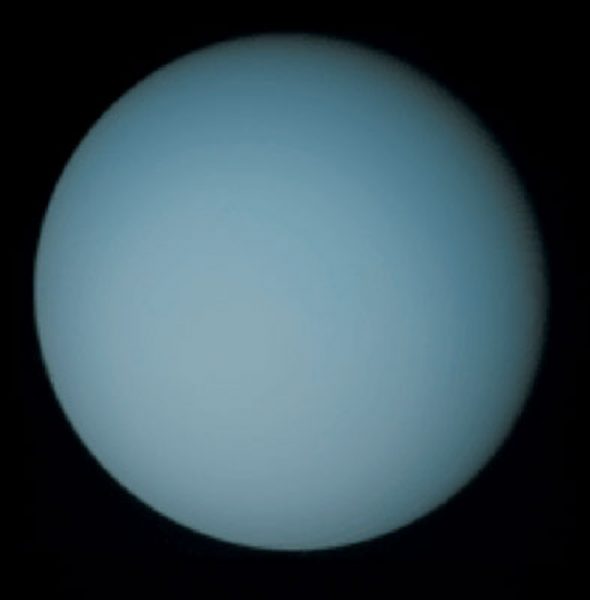
**NASA is in the early stages of planning a mission to Uranus, aiming to explore its potentially oceanic moons.** Nearly 40 years after Voyager 2's flyby, this mission seeks to detect liquid water oceans beneath the icy surfaces of Uranus's moons. Researchers from the University of Texas Institute for Geophysics (UTIG) are developing an innovative computer model that analyzes oscillations, or wobbles, in a moon's spin to determine the presence of sub-surface oceans. By measuring the wobbles along with gravity data, scientists can estimate the depths of these oceans and the thickness of the ice covering them. **The existence of these oceans is significant because liquid water is a key ingredient for life.** Uranus belongs to a class of planets known as ice giants, with more ice giant-sized bodies detected outside our solar system than any other kind of exoplanet. Discovering liquid water on Uranus's moons could suggest a vast number of life-supporting worlds throughout the galaxy. **The study, published in _Geophysical Research Letters_, advances our understanding of ocean detection methods.** UTIG’s research highlights the implications of tidally locked moons and their wobbling, with past techniques confirming Saturn's moon Enceladus's ocean. The success of the mission may depend on detecting such wobbles, offering insights into possible life beyond Earth.