Record-Breaking Discovery Sheds Light on Mysterious Long-Period Radio Transients
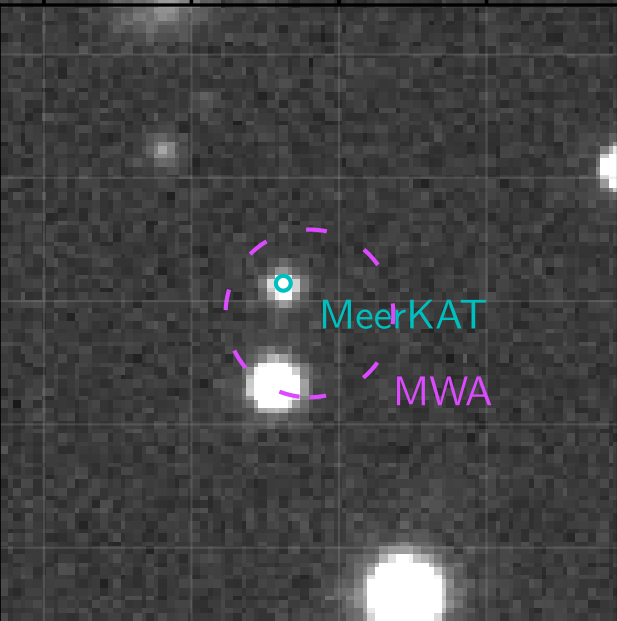
In a groundbreaking discovery, researchers from the Curtin node of the **International Centre for Radio Astronomy Research (ICRAR)** have detected the longest-period radio transient ever observed. The discovery, made by Associate Professor Natasha Hurley-Walker and student Csanád Horváth, involved a pulse of energy that repeats every three hours and lasts 30-60 seconds. This pulse was identified among archival data from the Murchison Widefield Array (MWA), a precursor to the Square Kilometre Array Observatory (SKAO). **Long-period radio transients** are a relatively new field in science, previously unexplained due to their occurrence deep within our galaxy, surrounded by myriad stars. The newly found transient, named _GLEAM-X J0704-37_, was located on the outskirts of our galaxy, making its study more feasible. The team utilized the MeerKAT telescope and the SOAR observatory to pinpoint the source of the radio waves to a binary star system, featuring an M dwarf and likely a white dwarf. This combination is believed to power the radio emissions, marking the first time such a system has been associated with long-period radio transients. This discovery answers key questions about these mysterious energy bursts while raising new ones, as M dwarfs alone lack the energy to produce such intense radio waves. The findings suggest the involvement of a white dwarf, the core of a dying star, to be the energy source. The presence of such transients in other archive data suggests many more could be awaiting discovery in the MWA's extensive 55-petabyte data archive, likened to a 'gold mine' for astronomers.