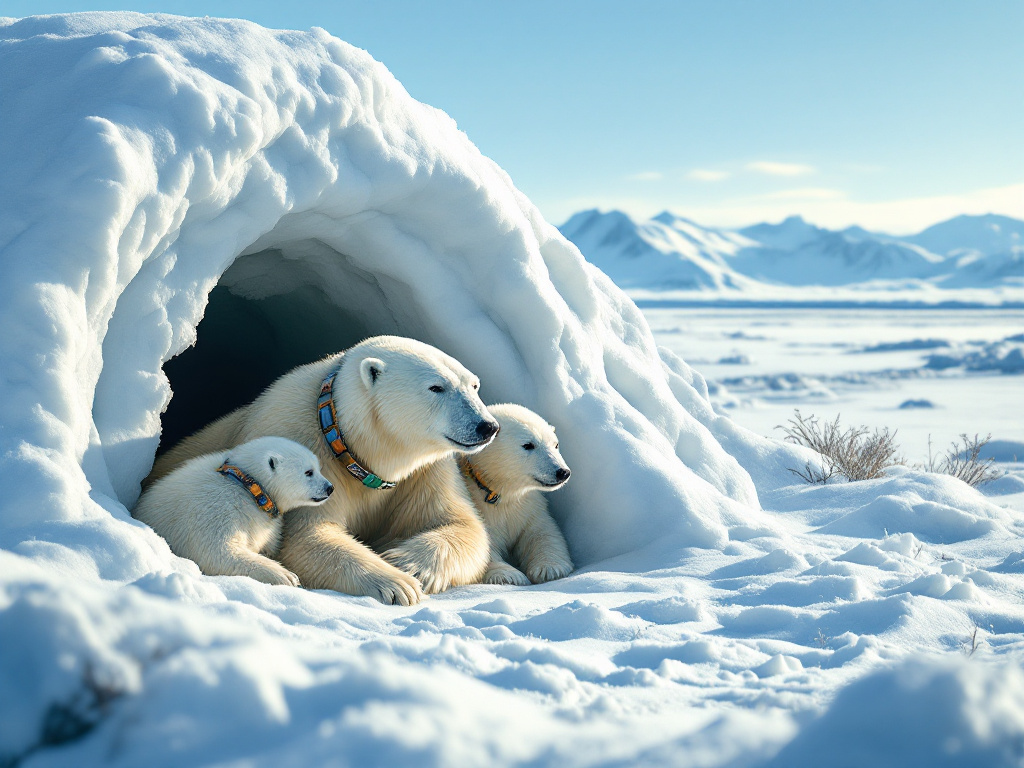
Revealing the Secrets of Polar Bear Maternal Denning
**Polar bears' maternal denning** is a crucial stage for cub survival, yet it remains poorly understood. Researchers have now combined **satellite collar data** with **specialized cameras** to gain insights into this enigmatic period. This study, led by Louise Archer, aimed to develop better tools for monitoring and understanding denning behaviors to protect polar bears. These **bears give birth in snow dens**, protecting the vulnerable cubs who grow significantly during a few months of nursing. Mothers typically lose half their body weight but remain in the den area post-birth, which was previously less understood. The researchers studied the **Barents Sea subpopulation** using satellite collars and cameras positioned at nine dens in Svalbard, Norway. Findings showed discrepancies between collar data and camera observations, underscoring the need for refined monitoring tools. By matching collar data with camera images, the study developed **three statistical models** that predict denning behaviors and the influence of external factors like temperature. **Results indicated** that bears emerged from their dens mainly during the day, with trips averaging 27 minutes. As temperatures rose, bears spent more time outside, suggesting these periods help cubs acclimatize. This study emphasizes the importance of **understanding polar bears' response to a rapidly changing Arctic**, where **climate change** and human expansion pose significant threats. Continuous monitoring and expanded data collection are vital for anticipating future changes in bear behavior and ensuring species survival.