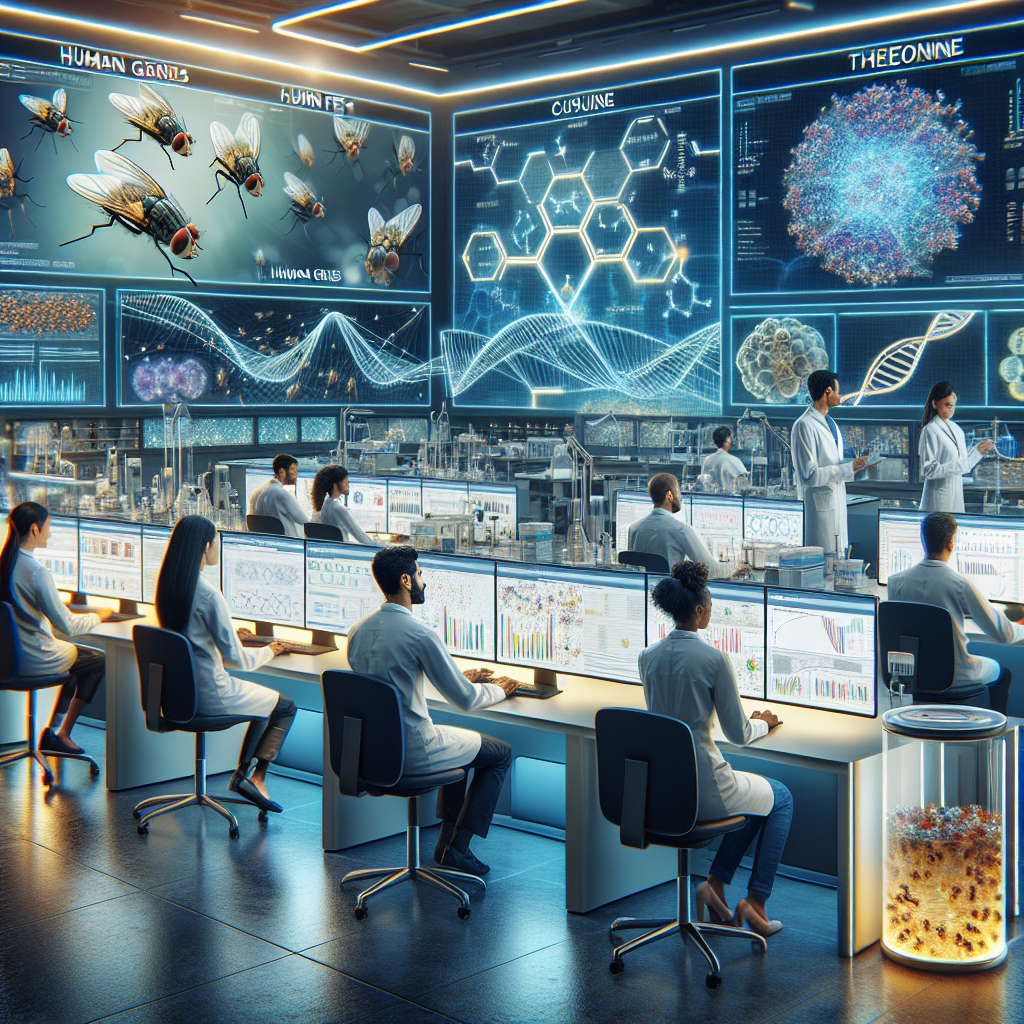
Revolutionary Machine Learning Approach Connects Fruit Fly and Human Aging Insights
In a pioneering study, the Buck Institute has utilized **machine learning** and systems biology to bridge insights between fruit flies and humans, aiming to streamline aging research. Typically, such discoveries would progress from flies to mice before considering human relevance, an often lengthy and costly process. By directly analyzing data from both species, researchers were able to correlate **key metabolites** that influence lifespan, notably identifying **threonine** as a promising candidate for therapeutic intervention in aging. This approach harnessed extensive data sets, focusing on metabolomics, phenotypes, and genomics, to evaluate 120 metabolites across various fruit fly strains and dietary conditions. Importantly, these metabolites were cross-referenced with human data from the UK Biobank, allowing the team to confirm their significance in both flies and humans. Threonine, known for its role in collagen, elastin production, and fat metabolism, was found to extend lifespan in flies in a **strain-and-sex-specific** manner. However, orotate, another metabolite, demonstrated negative impacts on lifespan across both species. The study underscores a **game-changing method** that may reduce reliance on mouse studies, promoting more direct, relevant human health applications and advancing precision medicine in geroscience.