Revolutionary Miniature Battery Paves Way for Biointegrated Devices
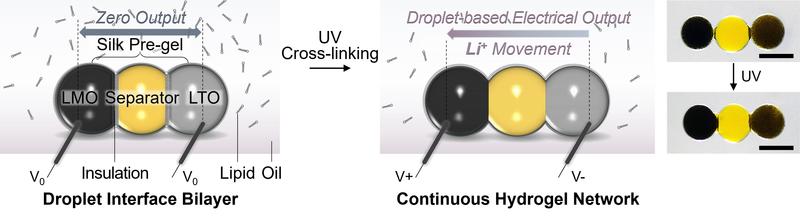
A pioneering team at the University of Oxford has developed a **miniature, soft lithium-ion battery** that could transform the future of biomedical devices. Presented in *Nature Chemical Engineering*, this **biocompatible hydrogel-based battery** stands out for its **tiny size and high energy density**, designed for minimally invasive interaction with biological tissues. The innovative power source is especially promising for use in heart defibrillation and pacing, addressing a critical need for small, powerful, and versatile batteries in biomedical applications. - **Construction and Functionality**: The battery is made from biocompatible hydrogel droplets assembled using a surfactant-supported assembly technique. This method connects three microscale droplets, each with a volume of 10 nanolitres, containing different lithium-ion particles that generate energy. The result is a rechargeable and biodegradable battery that can be light-activated and remotely controlled. - **Proof-of-concept and Potential**: Successful proof-of-concept tests involved controlling the beating and defibrillation of mouse hearts, showcasing the potential of this battery in treating cardiac arrhythmia—a leading cause of death globally. The ability to include magnetic particles enables this battery to function as a mobile energy carrier, offering new possibilities for bio-integrated electronic devices. - **Future Implications**: The battery's development represents a significant step toward creating wireless and biodegradable devices for medical applications. With a patent filed through Oxford University Innovation, the battery is poised to revolutionize applications in clinical medicine and small-scale robotics, paving the way for a new era of biocompatible and physiological-condition-operating electronic devices.