Revolutionizing Hurricane Predictions with Machine Learning
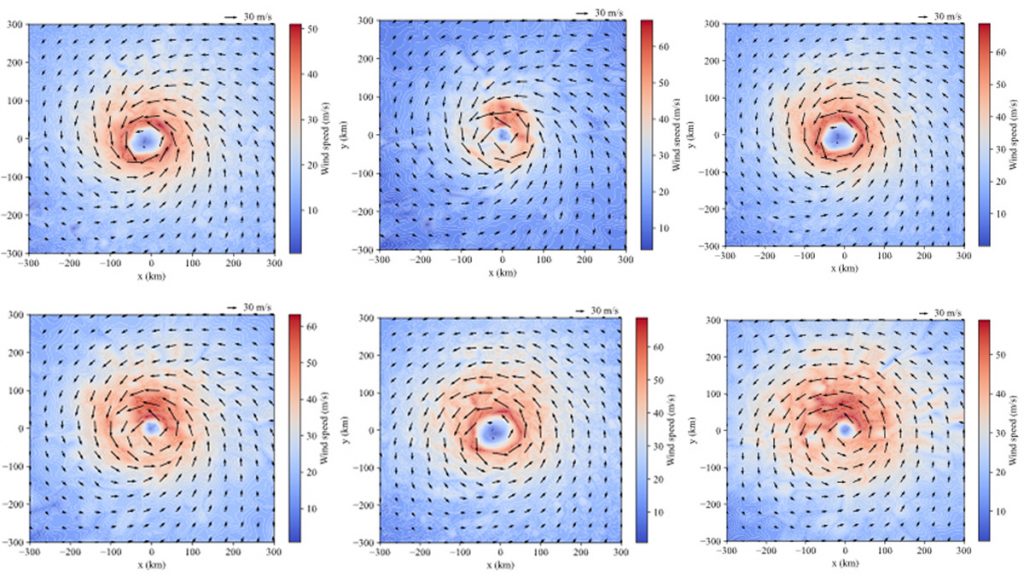
**Hurricanes, with their unpredictable nature, present a significant challenge for forecasting and disaster preparedness.** Researchers from the City University of Hong Kong have tackled this issue using a machine learning approach to model the boundary layer wind field of tropical cyclones more accurately. The boundary layer is crucial in atmospheric science as it is the layer closest to the Earth's surface, where we live and where hurricanes exert their destructive forces. Current forecasting methods rely on complicated numerical simulations that often lead to inaccurate forecasts due to the complex interactions within the boundary layer. Authors Qiusheng Li and Feng Hu have developed a machine learning model that incorporates atmospheric physics to provide more accurate and realistic predictions of a hurricane's wind field. This innovative approach requires only minimal observational data yet captures the complex behaviors of tropical cyclone wind fields more effectively than traditional models. The implications of this advancement are substantial. **Accurate reconstructions of the wind field can offer critical insights into a storm's intensity, structure, and potential impact, leading to better-prepared coastal regions and infrastructures.** As climate change continues to increase the frequency and intensity of hurricanes, this technology could be crucial in enhancing weather forecasts and risk assessments, thereby bolstering the resiliency of vulnerable communities. The researchers plan to expand their model, integrating more observational data and exploring its application across various types of storms worldwide. They aim to eventually integrate it into real-time forecasting systems to enhance its effectiveness in weather prediction and risk management.