Revolutionizing Neurological Treatments with Minimally Invasive Neural Interfaces
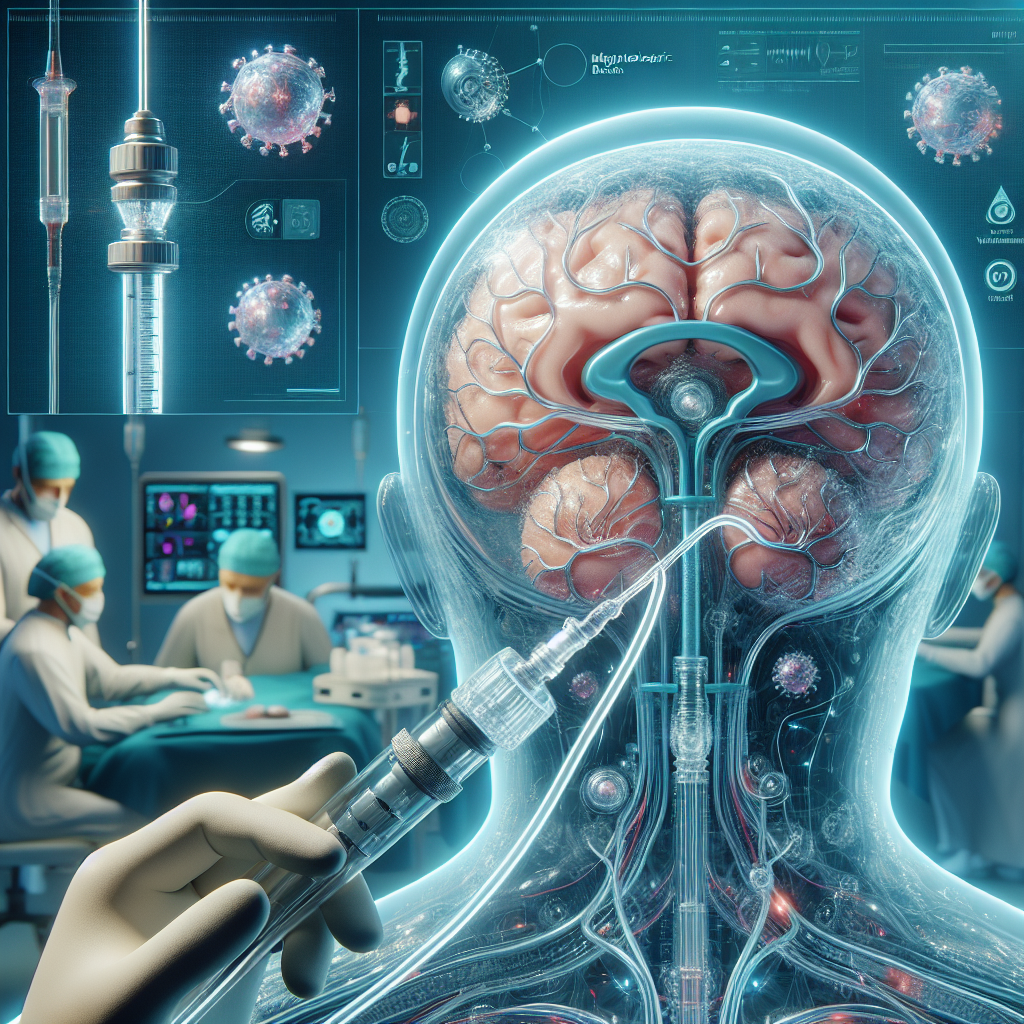
A research team led by Jacob Robinson from Rice University and Peter Kan from the University of Texas Medical Branch has unveiled a novel approach to interfacing with the nervous system that significantly lessens surgical risks. **Their work, published in Nature Biomedical Engineering, introduces endocisternal interfaces (ECI), enabling electrical recording and stimulation of the brain and spinal cord through cerebrospinal fluid (CSF).** This method circumvents the need for traditional surgery, which often involves making an opening in the skull. ECI leverages the CSF's natural pathway, using a lumbar puncture to introduce a flexible catheter capable of reaching neural structures. This catheter, along with a wireless system powered by miniature magnetoelectric bioelectronics, allows for precise neural interfacing. This innovation is particularly exciting as it marks the first time a neural interface can simultaneously access both the brain and spinal cord via a minimally invasive lumbar puncture. Preliminary tests involved imaging and measuring the subarachnoid space in humans and conducting experiments on large animal models, like sheep, to validate the feasibility of ECI. **Results were promising, demonstrating successful catheter deployment and functionality with minimal tissue damage after implantation for up to 30 days.** Unlike endovascular neural interfaces, ECI does not require antithrombotic medication, providing broader access to neural targets. This pioneering technology opens up new possibilities for treating neurological conditions such as stroke and epilepsy by reducing the risks associated with implantable neurotechnologies, expanding potential treatment options for various patient populations.