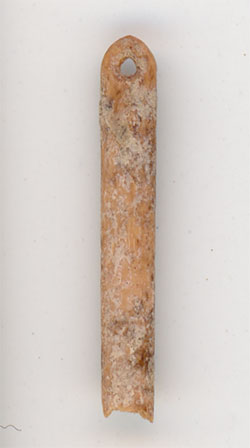
Secrets of the LaPrele Site: Ancient Needles and Garments Uncovered
Unearthing the past, scientists at the LaPrele archaeological site in Wyoming discovered bone needles crafted by the Paleoindians nearly 13,000 years ago. These needles, made from the bones of various fur-bearers including foxes, hares, and cats (potentially even the American cheetah), suggest an advanced adaptation strategy: the creation of tailored garments to protect against harsh climates. This find, detailed in the journal PLOS ONE, sheds light on how early humans expanded through northern reaches, eventually colonizing the Americas. **Using Zooarchaeology by Mass Spectrometry (ZooMS) and Micro-CT scanning**, the researchers identified the animal origins of 32 bone needle fragments. The findings underscore the importance of tailored clothing in human migration, hinting at the sophistication of prehistoric adaptation techniques employed by Early Paleoindians. These garments, made possible by needles and fur-bearers' pelts, offered protection from hypothermia and facilitated human survival in new environments. Examining the broader implications, the study reveals that animal bones at archaeological sites indicate a diverse range of uses beyond mere sustenance, such as clothing production. This underscores the multifaceted interactions humans had with their environment, employing both innovation and resourcefulness to thrive under challenging conditions.