Sedentary Lifestyles in Youth Linked to Increased Blood Pressure
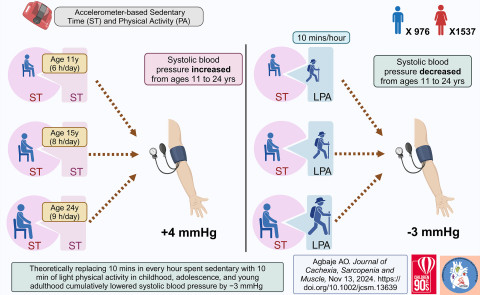
A **collaborative study** conducted by the Universities of Bristol, Exeter, and Eastern Finland, published in the *Journal of Cachexia, Sarcopenia and Muscle*, tracked 2,513 children from age 11 to 24. Initially, children spent six hours sedentary daily, which increased to nine hours by young adulthood. This rise in sedentary time was found to contribute to a 4 mmHg increase in systolic blood pressure. Interestingly, light physical activity (LPA) like walking, house chores, and cycling, when substituted for sedentary time, could reduce systolic blood pressure by 3 mmHg and diastolic by 2 mmHg. Engaging in moderate-to-vigorous physical activity (MVPA) did not lower blood pressure, owing to MVPA-induced muscle mass increase affecting physiological blood pressure. The study highlights the significance of encouraging LPA from a young age to avert hypertension, a major contributor to non-communicable diseases. The researchers stress the role of parents, pediatricians, and policymakers in fostering an active lifestyle for children to promote long-term cardiovascular health.