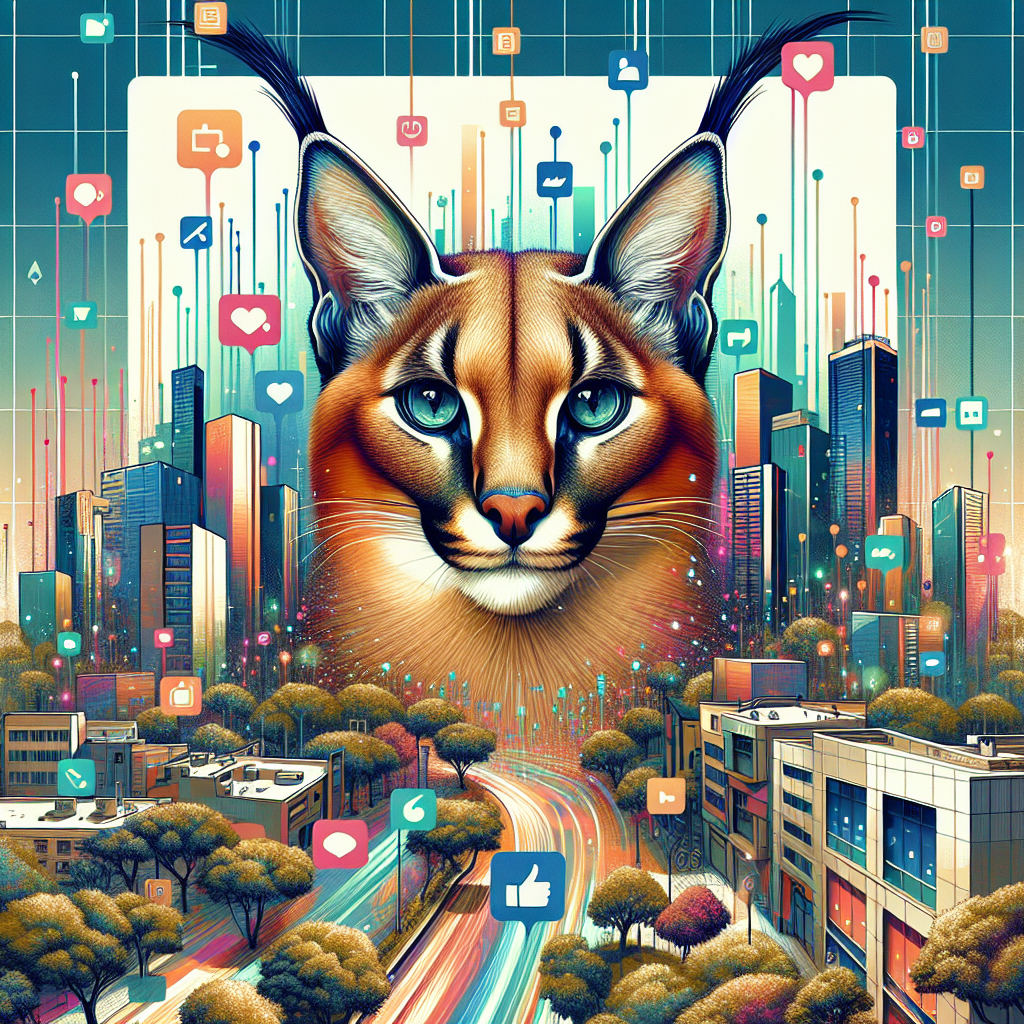
Social Media Plays a Role in Wildlife Conservation: The Case of the Caracal
**Social Media as a Conservation Tool** In a study published in *Environmental Communication*, researchers explore how **Facebook and Instagram can significantly contribute to wildlife conservation efforts** by enhancing public awareness and engagement. This research specifically investigates the role of the **caracal**, a wild cat native to Africa, in fostering public support due to its resemblance to domestic cats. **Social media's ability to amplify conservation messaging through viral content**, such as cat images and memes, is highlighted as a powerful tool in conservation strategies. ### **Harnessing Charisma for Conservation** The findings underscore the impact that 'charismatic' animals, like the caracal, can have as 'flagship species' for conservation efforts. Researchers, including Drs. Gabriella Leighton and Laurel Serieys from the University of Cape Town, emphasize the importance of using aesthetically appealing species to capture public attention and communicate the necessity of conserving urban wildlife. ### **The Urban Caracal Project** Initiated in December 2014, the **Urban Caracal Project (UCP)** aims to study the caracal's ecology and increase public engagement and awareness. The study revealed that since the project's inception, there has been a **91% increase in global search interest for 'caracal'**, compared to other African wildcats like the serval. **Social media engagement metrics** further indicate the project's success, with the UCP amassing over 16,800 Facebook followers and 7,300 Instagram followers, qualifying it as a 'micro-influencer'. ### **Community Involvement and Data Collection** The public's reported sightings and interactions via social media also play a crucial role in data collection and research. This citizen network has enabled researchers to gather vital data on caracal deaths, roadkill patterns, and exposure to pollutants, leading to a deeper understanding of threats facing the caracal population. **Engagement in conservation efforts through social media demonstrates significant public interest and concern for caracal welfare**, with positive adjectives like 'beautiful' and 'sad' reflecting emotional responses to their plight. Overall, the study illustrates how technology and community engagement via **social media platforms can be leveraged to enhance conservation efforts and public awareness**, marking a significant step forward in the domain of wildlife conservation.