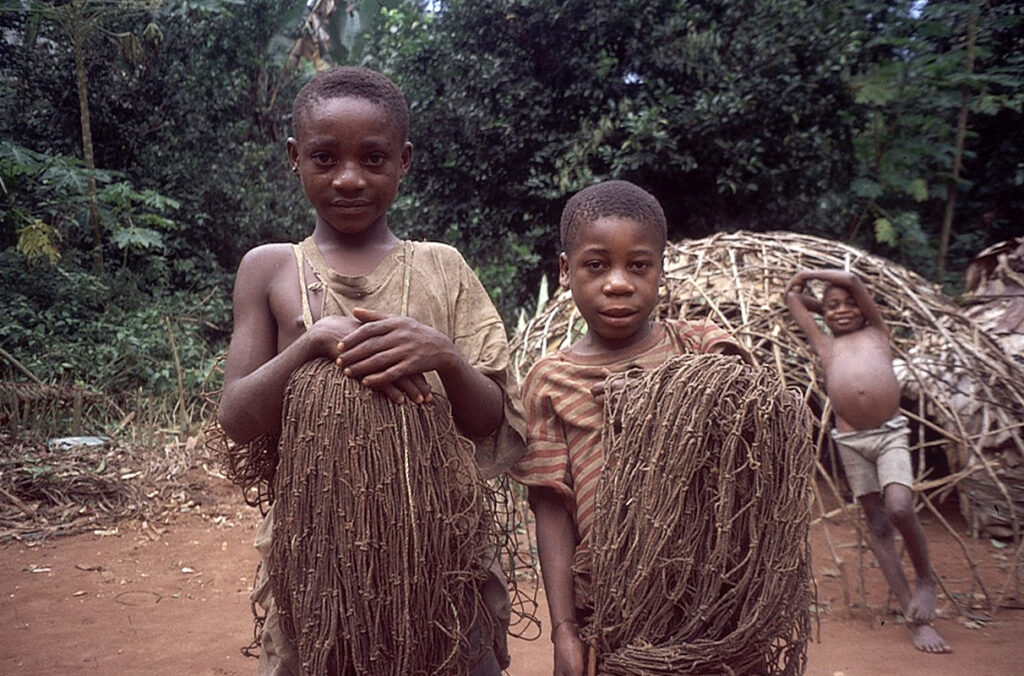
The Ageless Wisdom: How Hunter-Gatherer Children Learn From Their Community
In a fascinating study published in the *Proceedings of the National Academy of Sciences*, researchers from Washington State University and various international institutions explored how children in the Congo Basin learn essential skills through a community-based approach. **Hunter-gatherer children as young as six are already adept at tasks like hunting and identifying plants**, thanks to a social environment where learning is communal rather than purely familial. **Professor Barry Hewlett** and his team observed that cultural transmission in these societies often involves extended family and unrelated members of the community, not just parents. This stands in contrast to Western societies, where learning is predominantly parent-focused or occurs in formalized school settings. The study highlights how **intimate living conditions** in small camps foster a unique learning network, allowing children to acquire skills in a casual, nonverbal manner. Egalitarianism and respect for autonomy play crucial roles in this process, with children free to explore and learn at their own pace. This freedom supports what is referred to as 'cumulative culture'—the building and transmission of knowledge over generations, allowing humans to adapt across diverse environments. Hewlett hopes the research will deepen our understanding of social learning's role in human adaptability and cultural conservation.