The Unseen Side of Light: How Lasers Can Cast Shadows
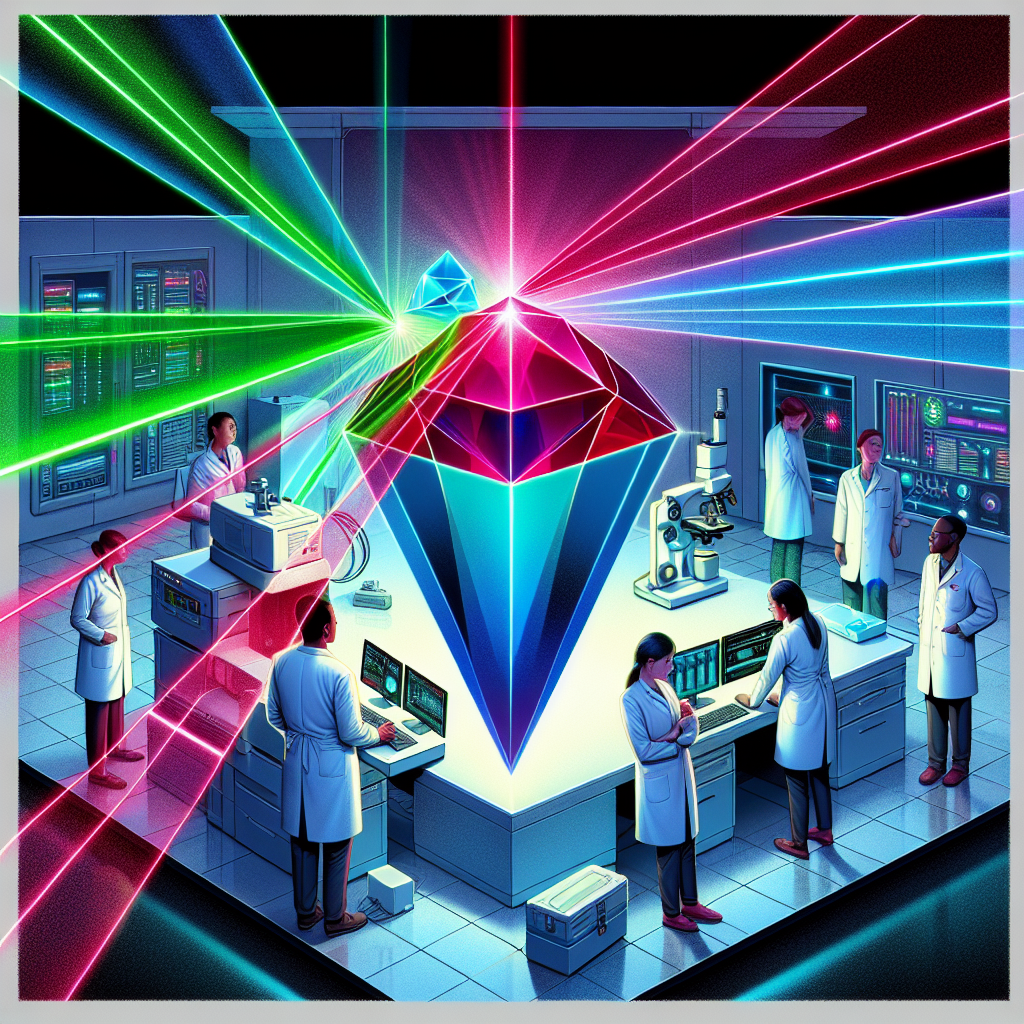
In a groundbreaking study published in *Optica*, researchers have demonstrated that under certain conditions, a laser beam can cast a shadow, akin to an opaque object blocking light. This finding challenges the traditional understanding of shadows and introduces new technological possibilities in optics. **The discovery was led by Raphael A. Abrahao** from Brookhaven National Laboratory and involved using a ruby crystal. By directing a high-power green laser through the crystal and illuminating it with a blue laser, the team observed a visible shadow formed by the interaction due to a nonlinear optical process. This effect is attributed to the green laser increasing the optical absorption of the blue laser, reducing its intensity and creating a shadow. The research was sparked by curiosity during a lunch conversation about experimental setups and treated laser beams as physical objects. **The shadow effect, with a contrast similar to a tree's shadow**, highlights the potential for light beams to control other light beams, offering insights into new optical applications like optical switching and precise light transmission control. The researchers plan to explore other materials and laser wavelengths to further this phenomenon.