Tracing the Origins of Meteorites: Discovering Their Family Trees
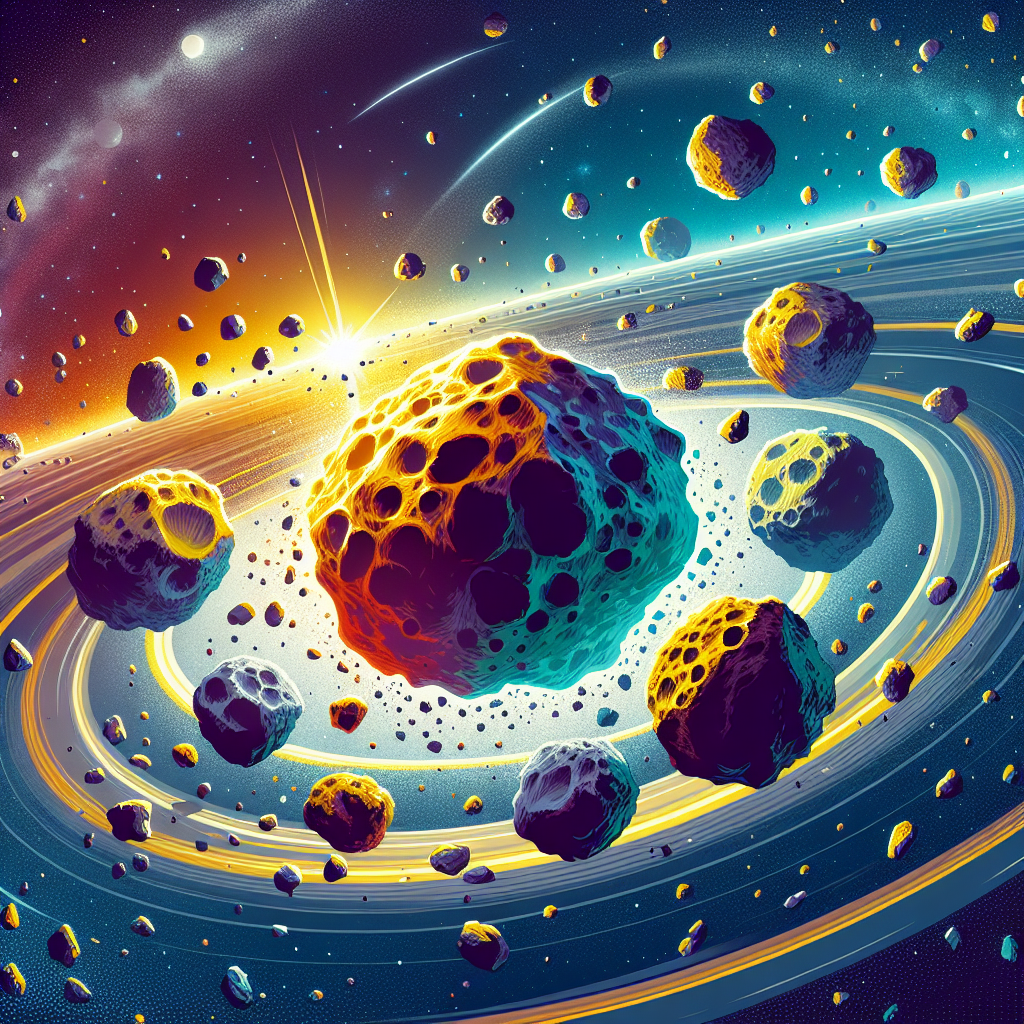
A groundbreaking study by an international team of researchers, published in *Astronomy and Astrophysics* and *Nature*, has revealed that **70% of all known meteorite falls** are linked to three distinct young asteroid families—**Karin, Koronis, and Massalia**. These families emerged due to collisions in the main asteroid belt **5.8, 7.5, and approximately 40 million years ago**. The research utilized a combination of telescopic surveys and sophisticated computer simulations to trace the collisional and dynamical evolution of major asteroid families. Notably, the **Massalia family** alone accounts for about **37% of all known meteorites**. Previously, the origins of most meteorites remained unidentified, with only **6%** being clearly traced to celestial bodies like the Moon, Mars, or Vesta. The newly identified families primarily consist of ordinary chondrites, which make up the majority of known meteorites. The study highlights how young asteroid families possess an abundance of small fragments, increasing the likelihood of collisions that propel these fragments towards Earth. Over time, older asteroid families become depleted as their fragments erode away. This ongoing dynamical evolution implies that as the current sources of meteorites transition, new ones from recent collisions will take their place. Furthermore, the study has significant implications for planetary defense, as it helps trace the origins of **kilometre-sized asteroids** that could pose threats to Earth. High-profile missions such as NASA's **OSIRIS-REx** and JAXA's **Hayabusa2** are linked to these findings, as they have studied asteroids like **Ryugu** and **Bennu**, tracing their origins to these asteroid families. The researchers aim to continue their exploration by investigating young asteroid families formed in the past **50 million years**, seeking to unveil the source of the remaining **10%** of meteorites.