Understanding Chaotic Crop Responses to Climate Change
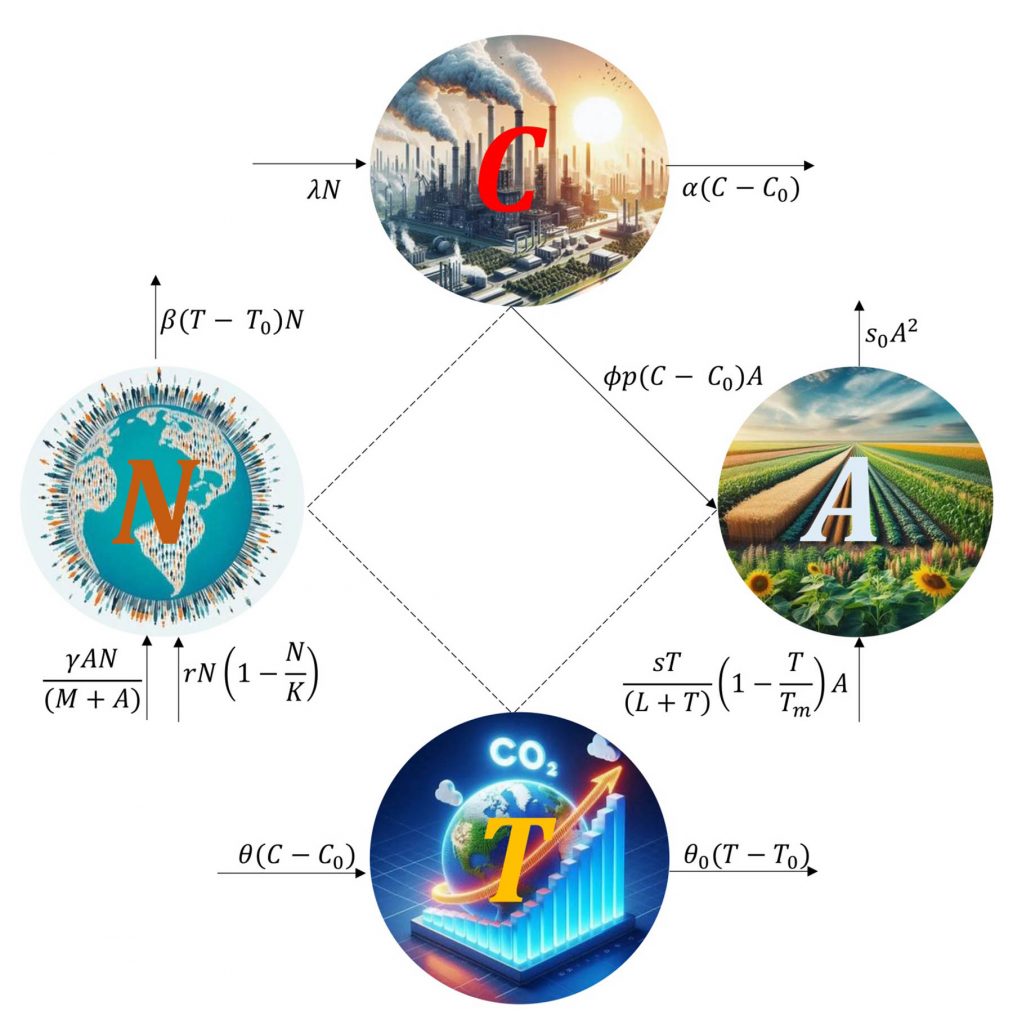
**The intricate relationship between rising atmospheric CO2 levels, global temperature increases, human population growth, and crop yields is the focus of researchers from Banaras Hindu University.** They have developed a mathematical model to address the complex interplay of these factors, with findings published in *Chaos* from AIP Publishing. The team utilized both autonomous and nonautonomous models to delve into seasonal variations and potential adaptation strategies. One of the key insights is the 'CO2 fertilization effect,' where an initial boost in crop growth due to higher CO2 can eventually be countered by heat stress when temperatures surpass certain thresholds. The research underscores the unpredictable nature of crop responses under climate stress, highlighting the importance of managing CO2 emissions to sustain food production. The study also points towards breeding or engineering crops with higher temperature tolerance as a promising mitigation approach to ensure food security. **A significant takeaway is the identification of critical temperature thresholds which can inform policymakers about when crop yields might begin to decline, aiding in crafting more effective strategies.** As the team progresses, the aim is to refine their model by incorporating additional variables such as insect population, water availability, soil quality, and nutrient levels, making it more comprehensive. Further real-world data validation and region-specific models are expected to enhance predictive capabilities and support localized farming adaptations. This work paves the way for more informed decisions in the realm of climate-resilient agriculture.