Understanding Tropical Storms' Impact on Water Resources and Migration
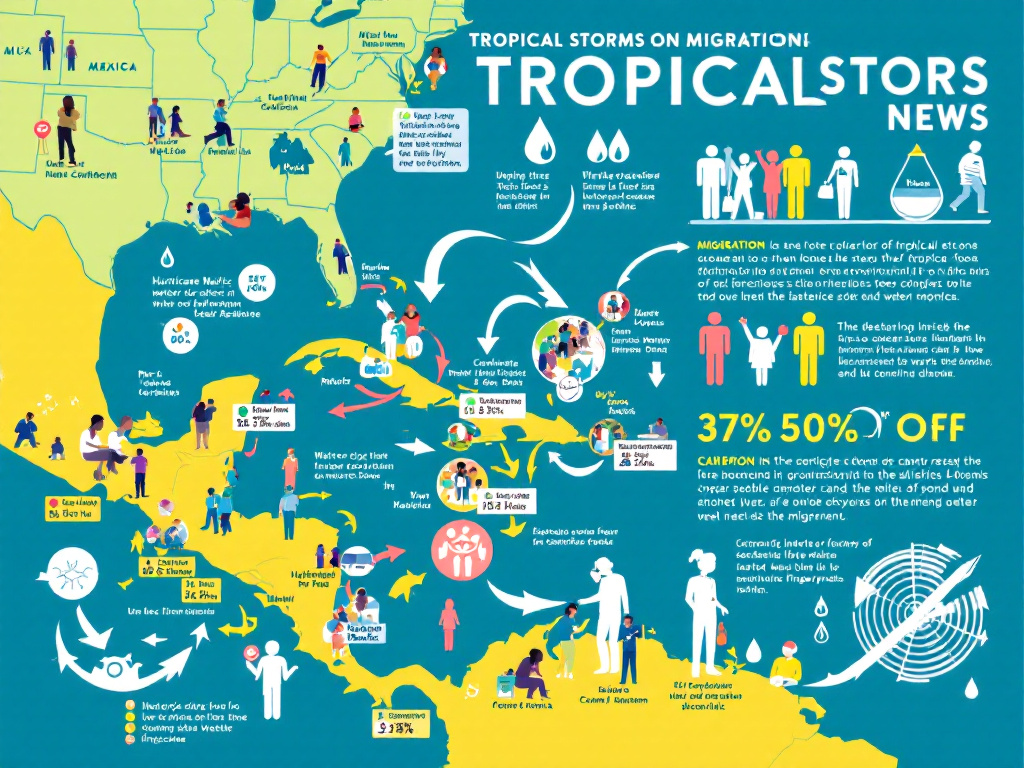
**Tropical storms**, such as hurricanes, pose significant challenges for coastal regions worldwide, particularly in the United States, Mexico, Central America, and the Caribbean. These storms are not only frightening but also result in substantial economic losses and human displacement. In 2023, **climate migration** driven by these events saw 2.5 million individuals attempt to cross the U.S. southern land border. New research led by The University of Texas at Arlington underscores the importance of studying past tropical storms to enhance community preparedness for future ones. The study, focused on the types and quantities of storm-related precipitation, aims to understand its effects on local water resources. Ricardo Sánchez-Murillo, the lead author and associate professor of earth and environmental sciences at UTA, highlights that while the impact of tropical storms on water resources is known, few studies have explored the water runoff from these events and their local population impacts. This gap is where their research contributes. Through collaboration with international partners from various hurricane-prone regions, including the Bahamas, Costa Rica, and Jamaica, the research team analyzed isotopic compositions, or **water 'fingerprints,'** from past storms. This provided insights into how storm precipitation affects regional water cycles, enhancing understanding of these weather events. Such analyses are crucial as climate change is expected to increase tropical storm frequency and intensity by 10-15%. Beyond examining isotopic compositions, the team plans future studies on evaporation and groundwater recharge patterns due to tropical storms, as well as potential storm path shifts caused by climate change. The research, funded partly by grants from the International Atomic Energy Agency and the Gulf Research Program, has broad implications for better storm impact predictions and management strategies.