Unlocking the Gut's Secret Defense: How Helpful Bacteria Boost Immunity
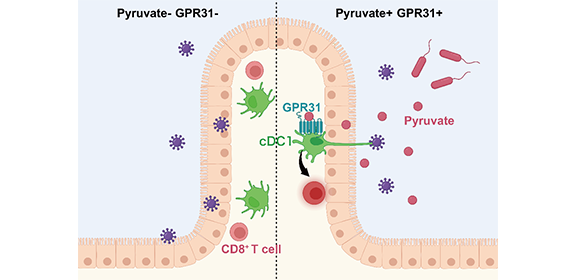
**Osaka University researchers have discovered the vital role of the GPR31 receptor in the immune system's response to gut microbes.** This receptor, found on conventional type 1 dendritic cells (cDC1s) in the gut, particularly in areas like the ileum, interacts with metabolites produced by beneficial gut bacteria. Among these metabolites, pyruvate stands out for its ability to activate this immune process. **When GPR31 detects pyruvate, it causes dendritic cells to extend their dendrites, enhancing their ability to sample the gut environment for antigens and bacteria like E. coli.** This extension allows these cells to effectively activate CD8+ T cells, crucial components of our immune defense against infections and even cancer cells. **The study, published in PNAS, marks the first identification of GPR31's role in human immune response within the gut.** It highlights the potential for developing new mucosal vaccines and treatments by targeting this pathway, as well as utilizing probiotics that increase pyruvate production to boost our immune system against gut infections. Senior author Kiyoshi Takeda emphasizes these findings could pave the way for innovative drug developments and immune-boosting probiotics.