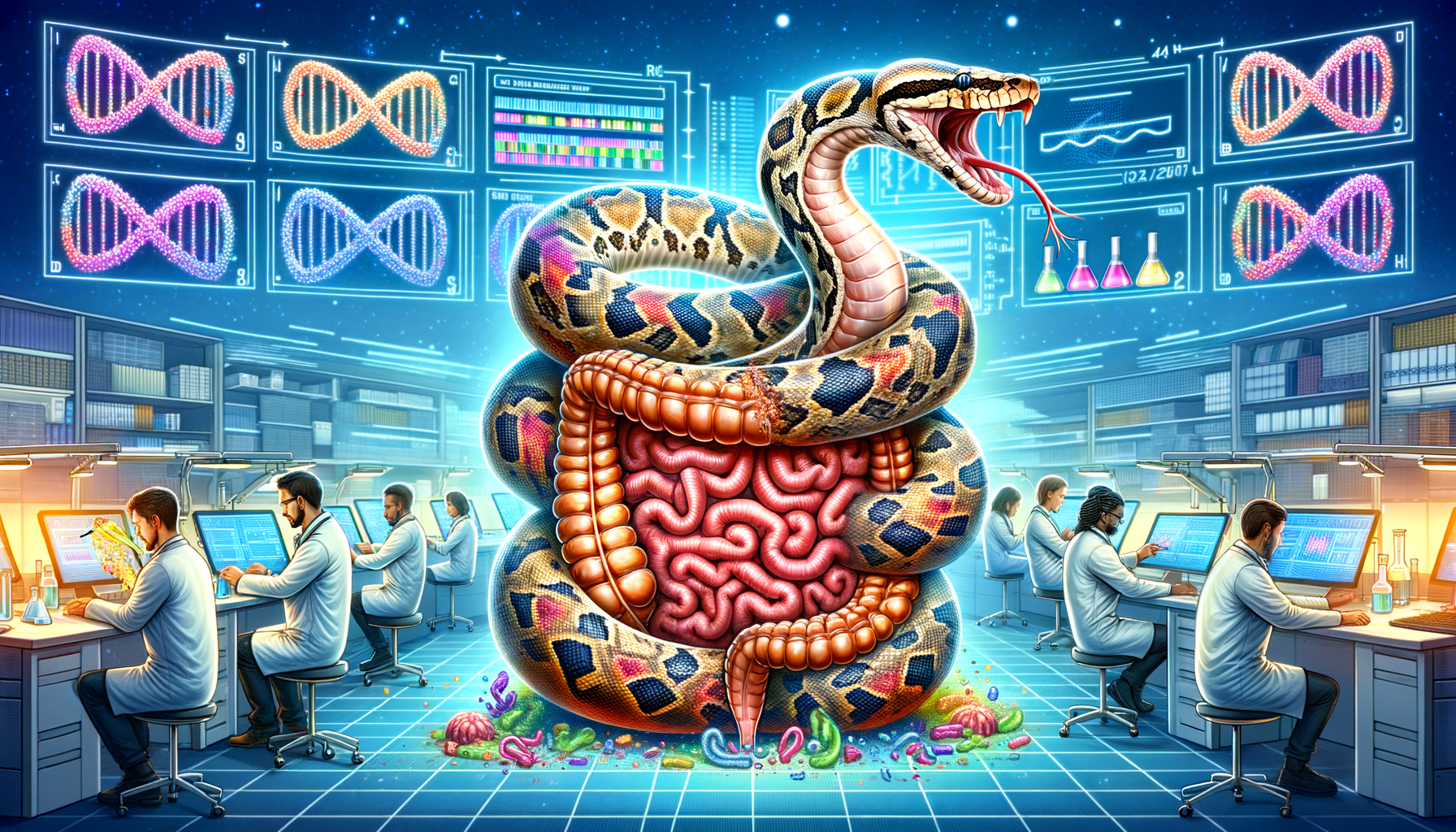
Unlocking the Secrets of Snake Intestinal Regeneration
**Intestinal regeneration is a fascinating biological process shared by all animals, enabling the repair and replacement of the intestinal lining.** Mammals, including humans, achieve this through stem cells located in intestinal crypts. However, snakes like boas and pythons offer a unique twist; despite lacking intestinal crypts, they undergo dramatic intestinal regeneration, especially after long fasting periods. Their intestines can atrophy to near non-functionality when fasting and then undergo rapid regenerative growth post-feeding, doubling in mass in just 48 hours. This radical transformation intrigued scientists, prompting a study led by researchers from The University of Texas at Arlington, UT Southwestern Medical Center, and the University of Alabama. They sequenced the RNA genes of pythons to unravel this mystery, revealing that pythons utilize conserved pathways seen in humans, although activated differently. **Key pathways for intestinal regeneration in pythons resemble those in humans post-Roux-en-Y gastric bypass, a common weight-loss procedure.** Crucially, these findings underscore the role of specific intestinal cells called BEST4+ cells, present in both humans and pythons but absent in often-studied mammals like mice. These cells are pivotal in coordinating early regeneration phases, promoting lipid transport and metabolism. This groundbreaking research could shed light on potential therapeutic targets for intestinal and metabolic diseases like diabetes and Crohn's disease. Additionally, understanding snake digestion offers broader insights into the evolutionary design of critical body functions, facilitating the prevention and treatment of prevalent human digestive disorders.