Unlocking Turtle Genomes: A Leap in Conservation and Evolutionary Biology
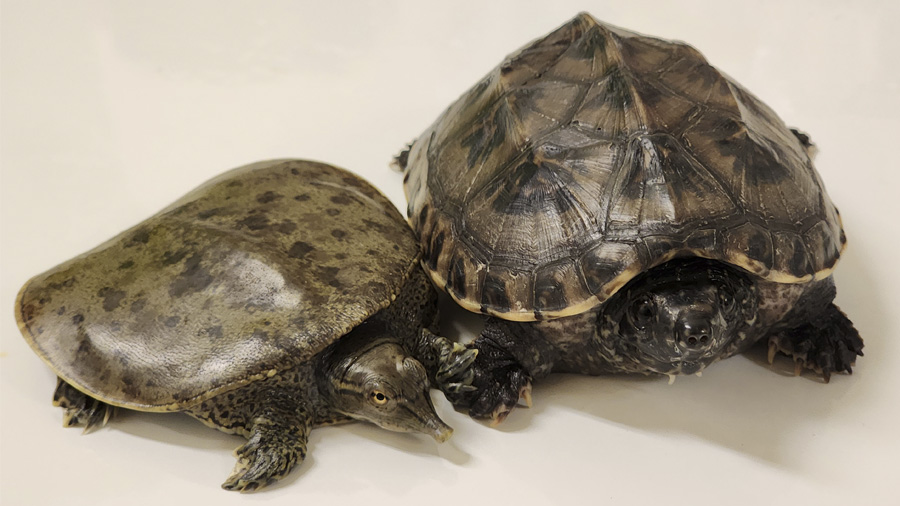
In a groundbreaking study, scientists from the Universitat Autònoma de Barcelona (UAB) and Iowa State University have generated the first genome assemblies of two hidden-neck turtle species, uncovering a previously unknown three-dimensional genome structure. **The research highlights the role of chromatin in gene function regulation, impacting evolution and speciation.** The study uses de novo assemblies, combining gene sequencing and expression techniques to decode the genomes of two cryptodiran turtle species with independently evolved sex chromosomes: one with human-like XX/XY and another with ZZ/ZW, typical of birds and butterflies. The findings reveal a novel chromatin conformation that facilitates centromere-telomere interactions, contributing to our understanding of the 3D chromatin structure in amniotes, a group that includes reptiles, birds, and mammals. **Aurora Ruiz-Herrera and Nicole Valenzuela, leading the study, emphasize the broader implications of these discoveries for understanding sex chromosome evolution and genome organization.** Turtles, with their resilience and longevity, provide a unique model for studies on biomedicine, particularly in aging and disease resistance. This new genomic data enhances our understanding of adaptation mechanisms in turtles, spanning 250 million years of evolutionary history, and could play a pivotal role in developing effective conservation strategies. **The research underscores the importance of high-quality genomic resources in advancing evolutionary and developmental biology, with the newly generated assemblies joining a select list of twelve previously reported Chelonian genomes.**