Unraveling Pulsar Mysteries: A New Look at Signal Distortion in Space
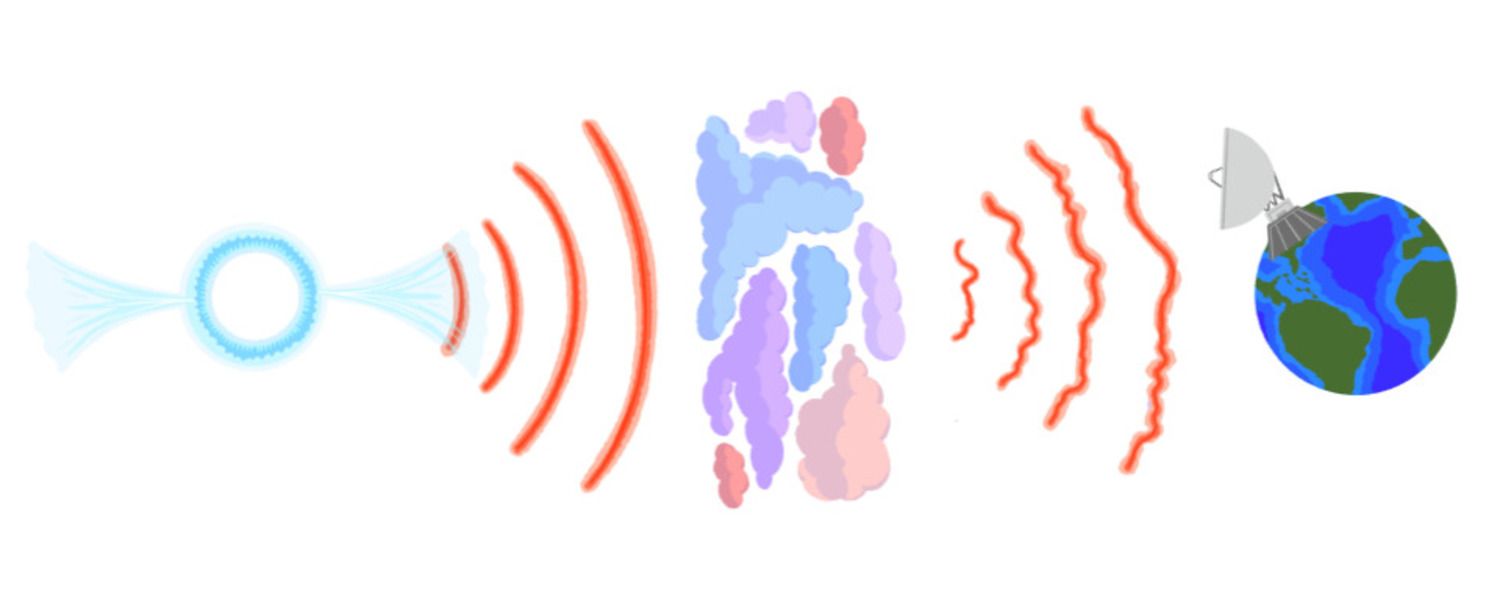
Dr. Sofia Sheikh, along with a cohort of undergraduate researchers from the Pulsar Search Collaboratory, conducted a study that unveils how pulsar signals are distorted as they traverse the interstellar medium (ISM). The research, published in _The Astrophysical Journal_, utilized archival data from the Arecibo Observatory to analyze scintillation bandwidths for 23 pulsars. Notably, the findings indicated that current ISM density models are less precise than believed, as measured bandwidths were higher than model predictions. **Diffractive Interstellar Scintillation (DISS)** is a key process here, where pulsar light 'twinkles' much like stars in the sky. This phenomenon arises when radio waves from pulsars pass through space particles, altering the waves' paths. Collaborations like NANOGrav use pulsar data to measure gravitational wave backgrounds, essential for understanding the early universe. Sheikh and her team's findings suggest that models incorporating galaxy structures like spiral arms better align with collected data, although they highlight the difficulty of accurately modeling the Milky Way's structure. The study paves the way for more refined ISM models, aiding the precision of pulsar timing arrays and improving our grasp of cosmic phenomena.