Unraveling the Role of KNS3 in Plant Nutrient Transport and Pollen Structure
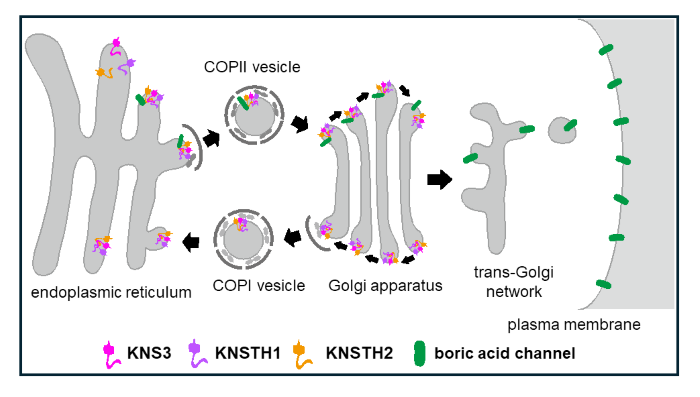
**In a pioneering study from Osaka Metropolitan University, researchers** led by Professor Junpei Takano have delved into the molecular dynamics of nutrient transport in plants, specifically focusing on the pathways that facilitate the movement of boric acid channels in the model plant *Arabidopsis thaliana*. The team discovered a crucial player in this process, the KAONASHI3 (KNS3) protein, a deficiency of which was shown to impede the correct transport of boric acid channels to the plasma membrane. **KNS3, alongside homologous proteins KNSTH1 and KNSTH2, forms a protein complex** that is responsible for moving these channels from the endoplasmic reticulum to the Golgi apparatus and eventually to the plasma membrane. This discovery not only highlights the complex traffic system within plant cells that ensures nutrient uptake but also sheds light on the intricate processes governing pollen structure. In mutant *Arabidopsis* lines lacking KNS3, the characteristic muskmelon-like pattern on pollen surfaces becomes faceless, indicating KNS3's broader role in cellular transport beyond nutrient channels. **Takano suggests that the study's insights could lead to agricultural advances** by refining how plants regulate nutrient uptake, potentially improving crop yields while lowering fertilizer dependency. Such findings underscore the potential of cellular and molecular research to transform agricultural practice by leveraging plant biology's intrinsic capabilities.