Unraveling the Sun's Mysterious Heating Puzzle: The Role of Alfvén Waves
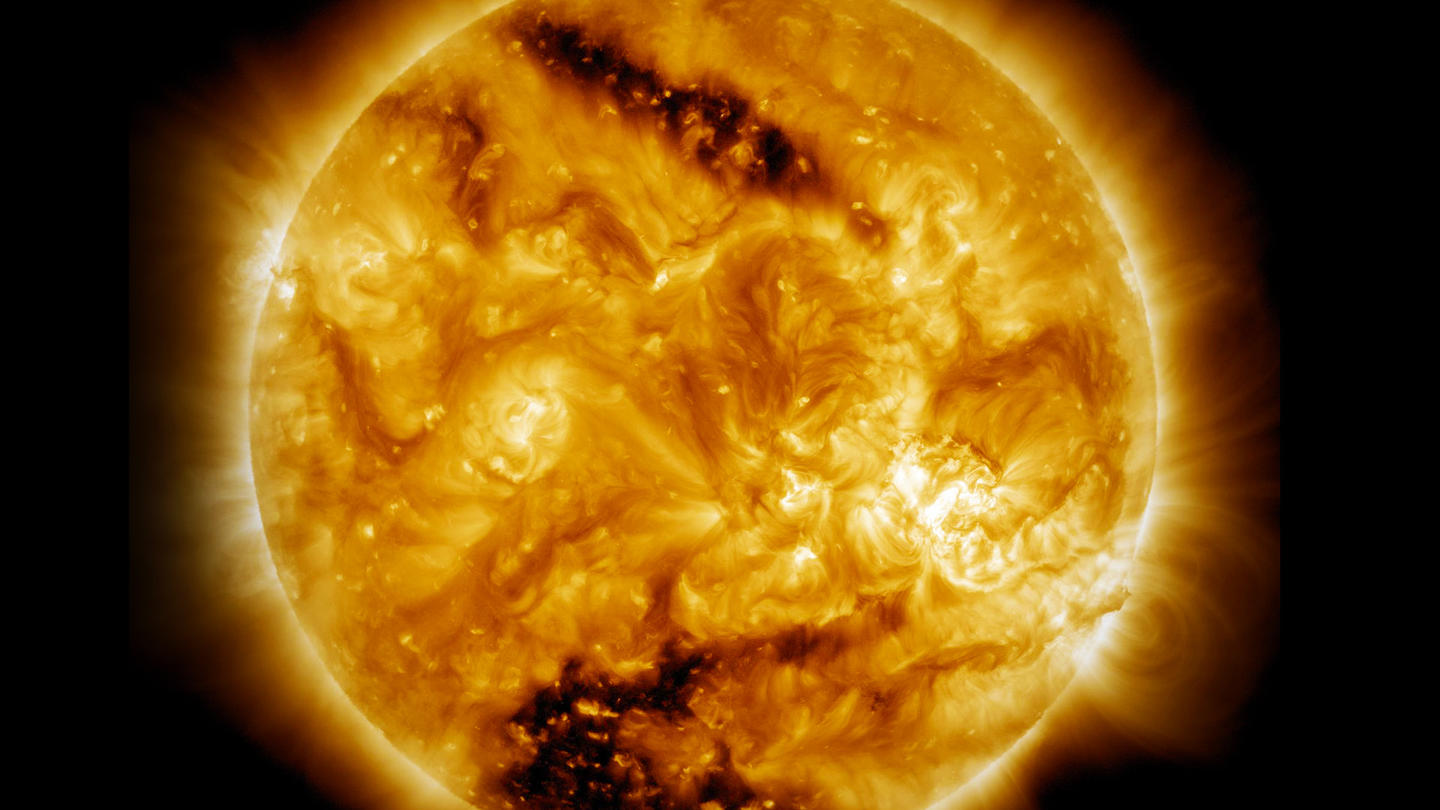
**The Sun's corona, an outer atmosphere hotter than its surface, has puzzled scientists since its discovery in 1939.** Recent findings by Sayak Bose and his team at the Princeton Plasma Physics Laboratory propose a significant advancement in solving this mystery. Using the 20-meter-long Large Plasma Device (LAPD) at UCLA, they simulated the conditions in coronal holes of the solar corona. **Coronal holes are low-density regions with open magnetic field lines**, and it had been hypothesized that Alfvén waves might heat these areas. **Alfvén waves, akin to vibrations produced by plucking guitar strings, occur in plasma due to magnetic field oscillations.** The research confirmed that these waves, when encountering varying plasma density and magnetic fields, reflect and interact with outward-moving waves, creating turbulence that heats the corona. **This marks the first experimental verification of Alfvén wave reflection contributing to coronal hole heating.** Complementary computer simulations supported the laboratory observations, indicating a sufficient energy reflection to account for the high temperatures. This research represents a collaborative effort between institutions such as Princeton, UCLA, and Columbia, funded by the DOE and NSF.