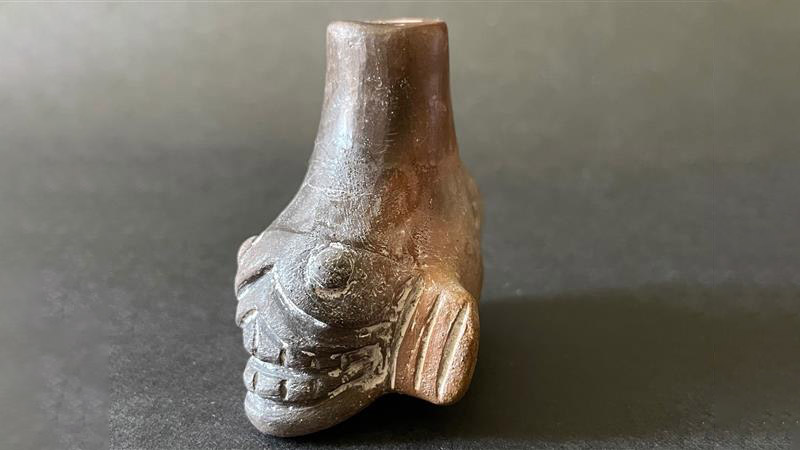
Unveiling the Mysteries of the Aztec Death Whistle
In a fascinating study conducted by researchers at the University of Zurich, the enigmatic Aztec death whistle was scrutinized to unravel the secrets behind its infamous chilling sound. **Led by Professor Sascha Frühholz**, the team employed 3D digital reconstructions of original whistles from Berlin's Ethnological Museum to understand their acoustic properties. These reconstructions revealed a distinct internal design featuring two opposing sound chambers, which create air turbulence, producing the whistle's iconic screeching sound. The study delves into the whistle's cultural and ritual significance within ancient Aztec communities. The instruments, often skull-shaped and potentially representing Mictlantecuhtli, the Aztec Lord of the Underworld, were integral to ritual ceremonies. Their terrifying sound is thought to prepare participants for sacrificial journeys into the mythological underworld of Mictlan. The research included sound recordings from both authentic and replica whistles. Listeners reported these noises as extremely frightening, with many perceiving them as akin to natural and organic sounds, such as human screams. This perception aligns with ancient traditions, where natural sounds were often mimicked in musical instruments for their symbolic and emotional connotations. Neuroscientific experiments provided further insights into the psychological impact of the death whistle. When played to modern listeners, **brain scans** revealed increased activity in regions related to affective responses and sound symbolism, confirming the hybrid nature of these sounds. While the exact experiences of ancient Aztec people remain elusive, the study posits that the emotional and symbolic power of the death whistle was likely harnessed to influence participants in ritual contexts.